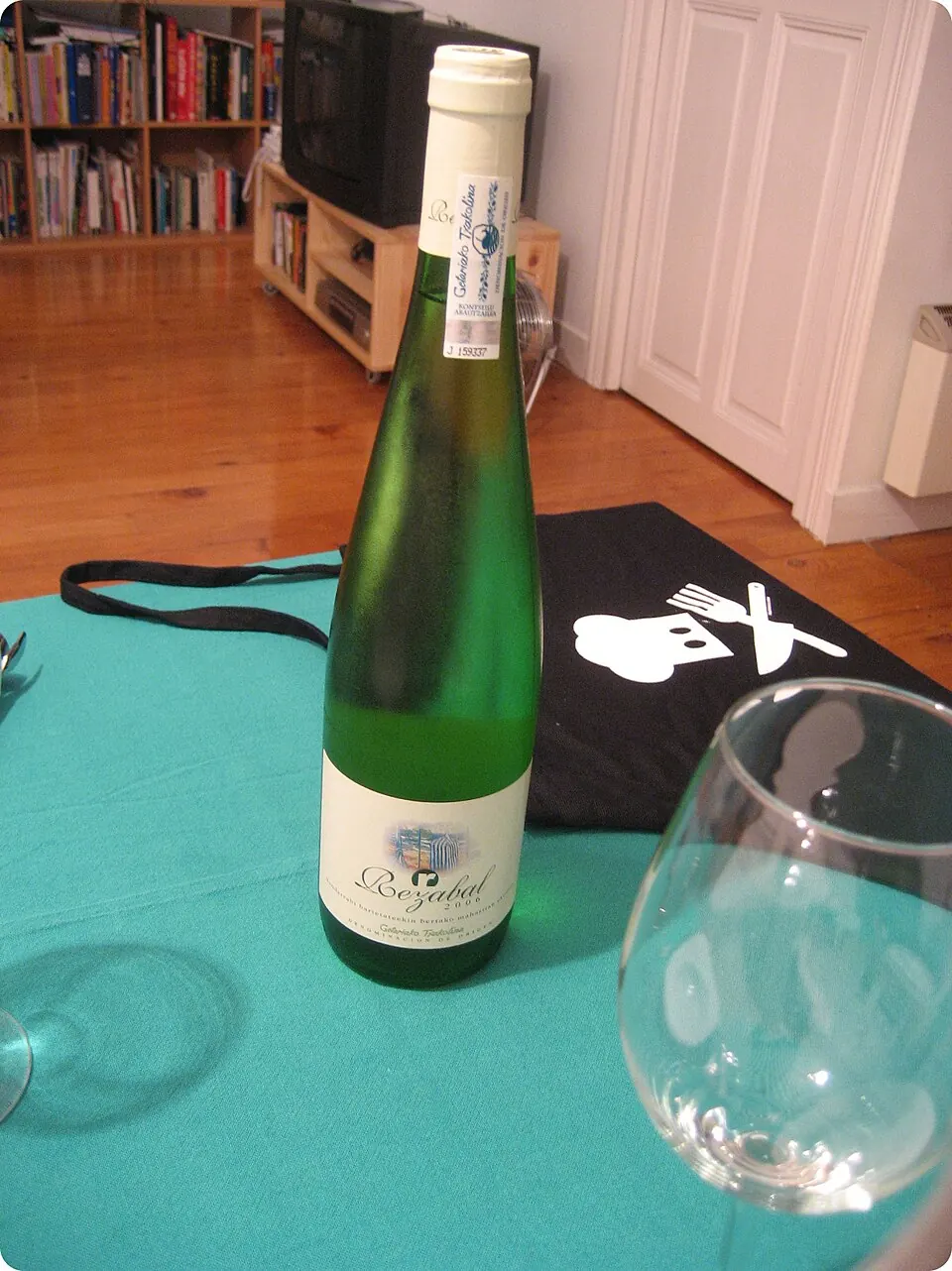

Txakoli is a dry white wine with high acidity and low alcohol content from Spain's Basque Country, Cantabria, northern Burgos, and Chile. The wine typically has an alcohol content between 9.5 and 11.5 ABV.
How it is made
Historically, txakoli was fermented in foudres, large old oak barrels. Modern production typically uses stainless steel vats. Various grape varieties are used, including Hondarribi Zuri, Hondarribi Beltza, and Folle blanche. The grapes are often cultivated in areas with high rainfall and specific temperatures, with some vineyards employing the trellis system to protect vines from adverse weather conditions.
History
Until the 1980s, txakoli was mainly a homemade wine in the Basque Country, Cantabria, and Valle de Mena. By the middle of the 19th century, it had nearly disappeared. Since 1989, when certain varieties received denominación de origen certification, the quality and popularity of txakoli have grown substantially. The Museo del Txakoli in Leioa near Bilbao maintains the heritage of this wine.
Types and styles
Three DO certified varieties of txakoli exist: Getariako Txakolina from Gipuzkoa, Bizkaiko Txakolina from Biscay, and Txakoli de Álava from Álava. Each has unique characteristics - Getariako Txakolina ranges from pale yellow to green, Bizkaiko varies in quality depending on microclimates, and Txakoli de Álava appears yellowish with high acidity. Additionally, chacolí was traditionally made in Cantabria and Valle de Mena in Burgos, while Chile has a long history of producing this wine.
How it is served
Txakoli is typically served as an aperitif and should be consumed within one year of bottling. It is commonly poured into tall glasses from a height and often pairs with pintxos. While white is the most common variety, red and rosé versions are also available.
Styles and varieties
- Getariako Txakolina (Spain)
- Bizkaiko Txakolina
- Txakoli de Álava (Spain)