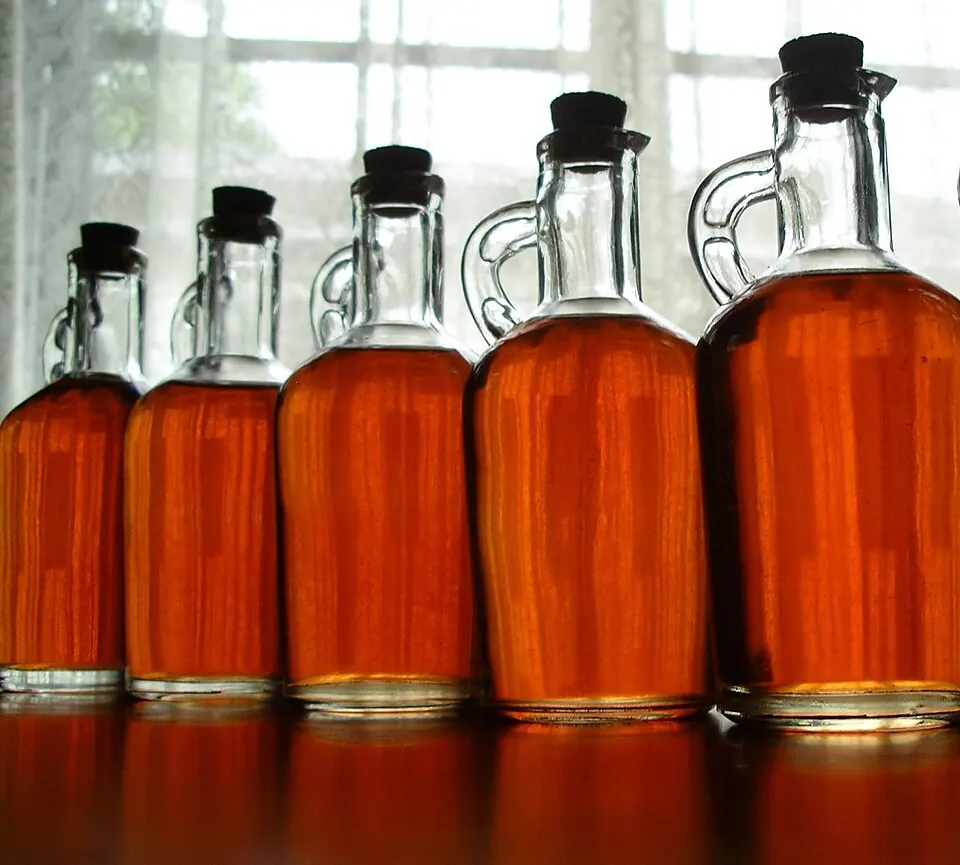

Liqueur is a sweet, aromatic alcoholic beverage made from fruit juices, herb infusions, and spices. It typically contains between 15% and 75% alcohol by volume and 25-60% sugar content. Production began in medieval times when monks and alchemists sought elixirs of life.
How it is made
Liqueurs are made by infusing fruits, herbs, roots, and spices in alcohol or by combining these ingredients with sugar syrup. The alcohol content varies widely from 15% to 75% by volume, while sugar content typically ranges from 25% to 60%.
Types and styles
Liqueurs are classified by strength, sweetness, main flavor ingredients, and alcohol base. Traditional categories include strong liqueurs (35-45% alcohol), dessert liqueurs (25-30% alcohol), and cream liqueurs (15-23% alcohol). Names can be either brand names like Baileys or generic terms like Chartreuse.
How it is served
Liqueurs are typically served after meals with tea or coffee as digestifs. They can be consumed neat or used in mixed drinks and cocktails. Some liqueurs are specifically designed for cocktails or diluted consumption, while others are used in desserts.
Adapted from the Russian Wikipedia article Ликёр, available under CC BY-SA 4.0.
Kinds of liqueur
- Triple sec (125 cocktails)
- Maraschino (73 cocktails)
- Curaçao (55 cocktails)
- Amaretto (36 cocktails)
- Irish cream (25 cocktails)
- Drambuie (21 cocktails)
- Chartreuse (20 cocktails)
- Galliano (17 cocktails)
- Baileys Irish Cream (16 cocktails)
- Kahlúa (16 cocktails)
- Jägermeister (15 cocktails)
- Chocolate liqueur (14 cocktails)
- Falernum (12 cocktails)
- Limoncello (11 cocktails)
- Crème de cassis (10 cocktails)
- Chambord (7 cocktails)
- Malibu (6 cocktails)
- Strega (6 cocktails)
- Midori (5 cocktails)
- Umeshu (5 cocktails)
- Pastis (4 cocktails)
- Pine liqueur (4 cocktails)
- Crème de menthe (3 cocktails)
- Frangelico (3 cocktails)
- Anisette (1 cocktails)
- Goldwasser (1 cocktails)
- Hpnotiq (1 cocktails)
- Mastika (1 cocktails)
- Pisang Ambon (1 cocktails)
- Shrub (1 cocktails)
- St-Germain (1 cocktails)
- Tia Maria (1 cocktails)
- Advocaat
- Alchermes
- Balsam
- Barraquito
- Brennivín
- Elixir
- Ginjinha
- Génépi
- Licor Beirão
- Mead
- Mirto
- Patxaran
- Ratafia
- Sheridan's
- Tubi 60
- Vana Tallinn
Other styles
- Kräuterlikör
- Nocino (Italy)
- Select (Italy)
- Punsch
- Tuaca (Italy)
- Kümmel (Netherlands)
- Cordial
- Crème de Noyaux
- Salmiakki Koskenkorva (Finland)
- Cream liqueur
- Xtabentún
- Crème liqueur
- Centerbe (Italy)
- Vișinată (Romania)
- Agwa de Bolivia
- Kitron
- Rosolio (Italy)
- Cherry bounce
- Ancho Reyes
- Ammazzacaffè
- Lemon liqueur
- Parfait d'amour (France)
- Genziana liqueur
- Fruit soju
- Allen's Coffee Brandy
- Apfelkorn
- Hierbas (Spain)
- Blutwurz (Bavaria)
- Schrobbelèr (Netherlands)
- Mandarine Napoléon (Belgium)
- Maesil-ju
- Grappamiel
- Vin de liqueur
- Guignolet
- Crème de banane
- Cloudberry liqueur (Finland)
- Saint Brendan's (Northern Ireland)
- Manzana verde
- Verveine du Velay (France)
- Boerenjongens (Netherlands)
- Aurum (Italy)
- Cedratine
- Bierlikör
- Nespolino (Italy)
- Café Rica (Costa Rica)
- Kamora
- Stellina
- Bargnolino (Italy)
- Peanut liqueur
- Pucker
- Licor de oro (Chile)
- Sassolino
- Murtado (Chile)
- Calisaya
- Allasch (Germany, Latvia)
- Herbero
- Tip van Bootz
- Liqueur Fogg
- Hideous
- Cucui (Aruba)
- Kruškovac
- Menta (Bulgaria)
- Micheline (France)
- Crème de cerise
- Cantueso (Spain)
- Garluche
- Eau de créole
Well-known brands
- Amarula (South Africa)
- Riga Black Balsam (Latvia)
- Killepitsch
- Herbsaint
- Glayva (Scotland)
- Gold Strike (Netherlands)
- Kuemmerling
- Bärenfang (Germany, Prussia)
- Izarra (French Basque Country)
- Sourz
- Absente
- Schierker Feuerstein
- Dooley's
- Nocello
- Brady's Irish Cream (Ireland)
- Toussaint Coffee Liqueur (Haiti)
- Sechsämtertropfen