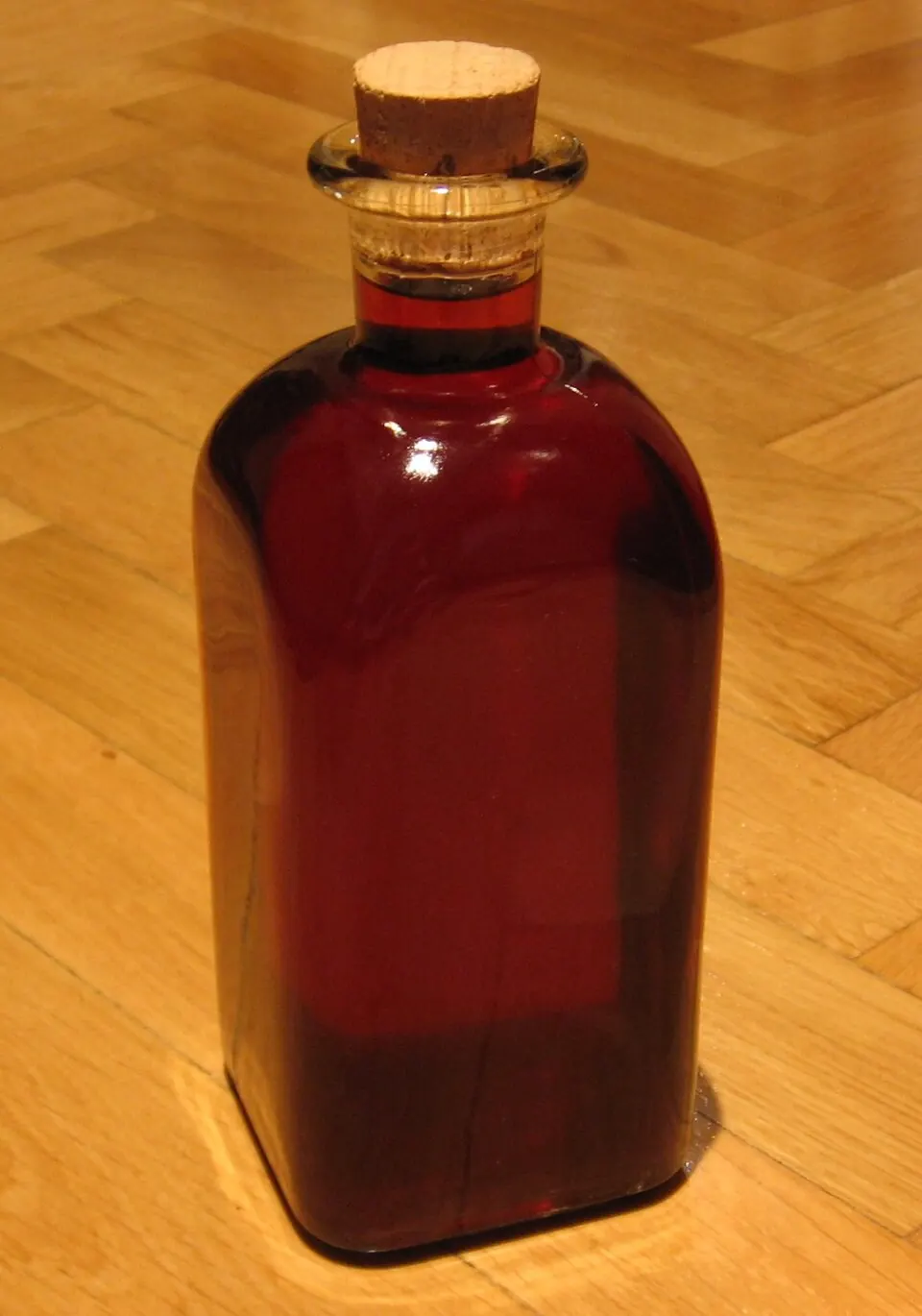

Patxaran is a liqueur from northern Spain, traditionally made from sloe berries and anisette. It has an alcohol content of 20-30% and is typically served as a digestif.
History
Patxaran originated in Navarre and the Basque Country. The name comes from the Basque term for sloe berry. The first mentions of Patxaran date back to the 14th century, when it was served at the wedding banquets of Navarrian kings. Industrial production began in 1816 by Ambrosio Velasco. In 1987, a Regulatory Council was established to regulate the production and geographical origin of Patxaran, which must be produced in Navarre to bear the name.
How it is made
Patxaran is made by macerating sloe berries in alcohol with sugar syrup, anise, and various aromatic essences, often fruit or vanilla. The maceration process lasts from one to eight months. Traditionally made in wooden barrels, industrial production now typically uses glass containers. The liqueur can be sweet or dry and ranges in color from dark red to brown, though various essences can create different colors.
How it is served
Patxaran is traditionally served chilled as a digestif after meals, in small glasses or shot glasses, often with coffee. Ice is not added directly to the glass but may be served in a small cup alongside. In some Spanish restaurants, inexpensive varieties are offered complimentary after meals.
Adapted from the Russian Wikipedia article Пачаран, available under CC BY-SA 4.0.