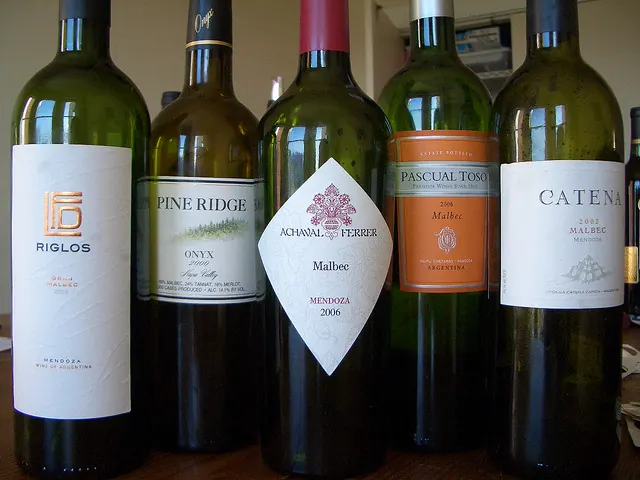

Argentine wine is wine produced in Argentina, known for its diverse terroirs and high-altitude vineyards. The country has a winemaking tradition dating back to the 16th century and produces a variety of wine styles with typical alcohol content ranging from 12% to 15% ABV.
History
Winemaking in Argentina dates back to the 16th century when Spanish colonists and Jesuit missionaries planted the first vineyards near their missions. The first commercial vineyard was established in Santiago del Estero in 1557. In the 19th century, French agronomist Michel Aimé Pouget introduced French grape varieties including Malbec, Cabernet Sauvignon, and Cabernet Franc. The construction of a railway from Buenos Aires to Mendoza in 1885 significantly boosted the wine industry by facilitating transportation and bringing modern technologies. In the 1990s, Argentina began focusing on quality wine production for international markets, transforming its wine industry.
How it is made
Argentine winemaking benefits from the country's unique geography and climate. Vineyards are typically located at high altitudes, with many regions situated between 600 and 1,500 meters above sea level. The dry, continental climate with minimal rainfall reduces the need for pesticides and allows for organic farming practices. Irrigation is essential due to low rainfall, with traditional flood irrigation and modern drip methods both being used. The intense sunlight and significant diurnal temperature variations result in grapes with thick skins, producing wines with concentrated flavors and balanced acidity.
Types and styles
Argentina produces a wide variety of wine styles, with Malbec being the most internationally recognized grape variety. Other important varieties include Cabernet Sauvignon, Chardonnay, Torrontés, and Bonarda. The country has a classification system with three categories: Indication de Procedencia (I.P.), La Indication Geografica (I.G.), and Denomination de Origen Controlada (D.O.C.). Only two regions currently have DOC status: Luján de Cuyo and San Rafael. Argentina has over 100 unique geographical indications, reflecting the diversity of its terroirs.
Climate and geography
Argentina's wine regions are primarily located in the foothills of the Andes, stretching from north to south. The high altitude serves as a natural temperature regulator, allowing vineyards to exist at latitudes closer to the equator without excessive heat during the growing season. Most regions have a semi-arid desert climate with annual rainfall rarely exceeding 250mm. This dry climate minimizes disease pressure on the vines. The Andes influence all wine regions, providing meltwater for irrigation through a complex system of dams and canals. Soils are generally young, alluvial, sandy, and loamy with lenses of clay, gravel, and limestone.
Adapted from the Russian Wikipedia article Виноделие в Аргентине, available under CC BY-SA 4.0.