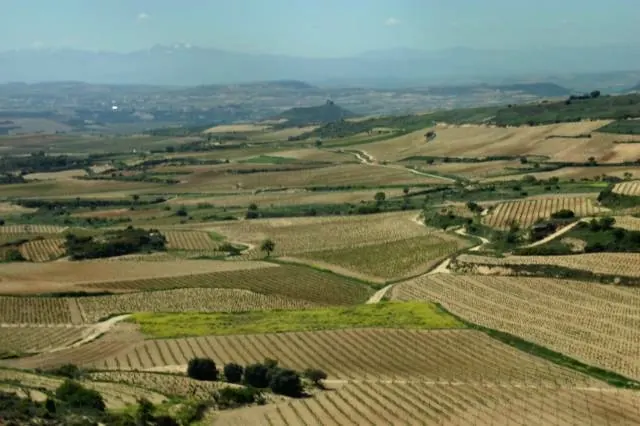

Rioja is a wine region in northern Spain with the highest quality designation of DOCa. It produces primarily red wines, along with white and rosé varieties, using traditional winemaking methods.
History
Winemaking in Rioja dates back to ancient times, with evidence from as early as 873 AD. Monasteries along the Camino de Santiago were instrumental in wine production during the Middle Ages. The region gained international recognition in the 19th century when French winemakers introduced barrel aging techniques after phylloxera devastated French vineyards.
Geographical Description
Rioja DOCa spans three autonomous communities and is divided into three sub-regions: Rioja Alta (west of Logroño), Rioja Alavesa (in Álava province), and Rioja Baja (southeast of Logroño). Each zone has distinct climate and soil characteristics that influence the wine's profile.
Grape Varieties
Rioja is considered the birthplace of the Tempranillo grape, which accounts for 75% of vineyards. Red wines must contain at least 95% Tempranillo, Garnacha Tinta, Graciano, Mazuelo, and Maturana Tinta. White wines use Viura, Garnacha Blanca, Malvasía, Maturana Blanca, Tempranillo Blanco, and Turrientes, with Chardonnay and Sauvignon Blanc permitted in limited quantities.
Production
Rioja wines are aged in 225-liter oak barrels, followed by bottle aging. The classification system includes Crianza (minimum 2 years total aging), Reserva (minimum 3 years total), and Gran Reserva (minimum 5 years total). French and American oak barrels are used for aging, with many producers blending wines from different barrel types.
Traditions
On June 29th, the city of Haro hosts a wine festival where participants celebrate by splashing red wine on each other, honoring the region's viticultural heritage.
Adapted from the Russian Wikipedia article Риоха (винодельческий регион), available under CC BY-SA 4.0.