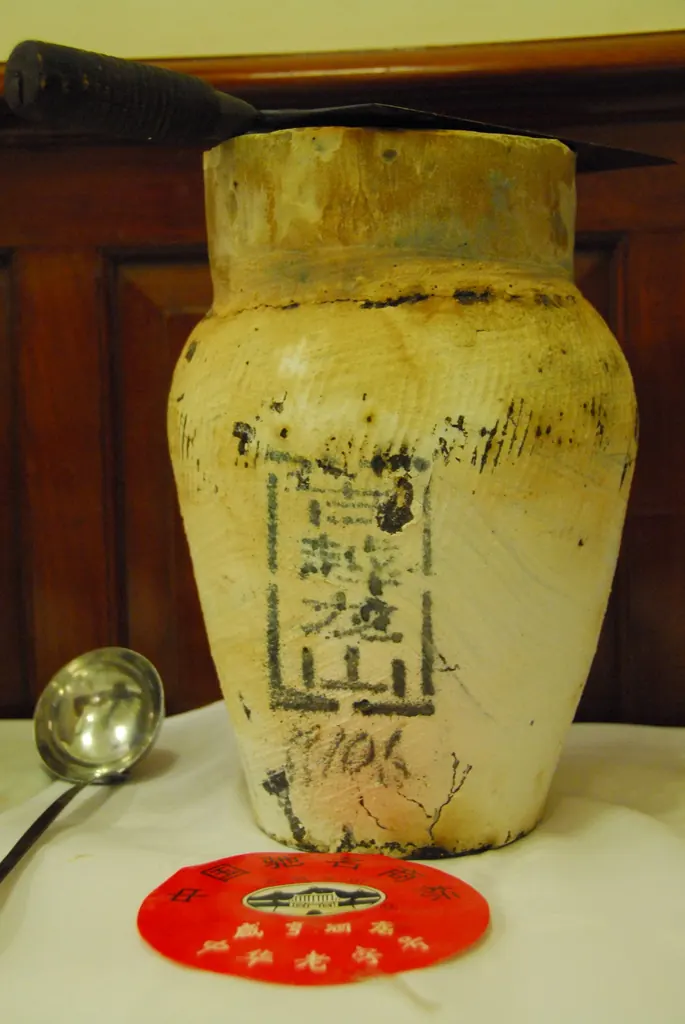

Shaoxing wine is a type of Huangjiu rice wine made from glutinous rice, water, and wheat yeast. It originates from Shaoxing in China's Zhejiang province and typically has a moderate strength.
How it is made
Traditional production involves manually stirring rice mash with a wooden hoe every 4 hours to ensure even yeast sugar breakdown. This method, known as kaipa, prevents the wine from becoming bitter or acidic. Experienced winemakers assess fermentation by listening to the bubbling sound in the wine vat. Besides glutinous rice, Shaoxing wine can also be made from sorghum or millet.
History
Rice wine was first produced in China between 770-221 BCE, primarily for ceremonial purposes. During the late Qin dynasty, educated advisors from Shaoxing promoted its use throughout China, making it an integral part of Chinese festivals. Today, its popularity has declined in favor of other alcoholic beverages in China, though it remains widely used in cooking.
How it is served
Shaoxing wine is consumed both as a beverage and as an ingredient in traditional Chinese cuisine. Wines sold internationally are typically used for cooking and may contain spices and additional salt. It is also stored in clay vessels and aged wines are labeled by production year, similar to vintage wine.
Adapted from the Russian Wikipedia article Шаосинское вино, available under CC BY-SA 4.0.