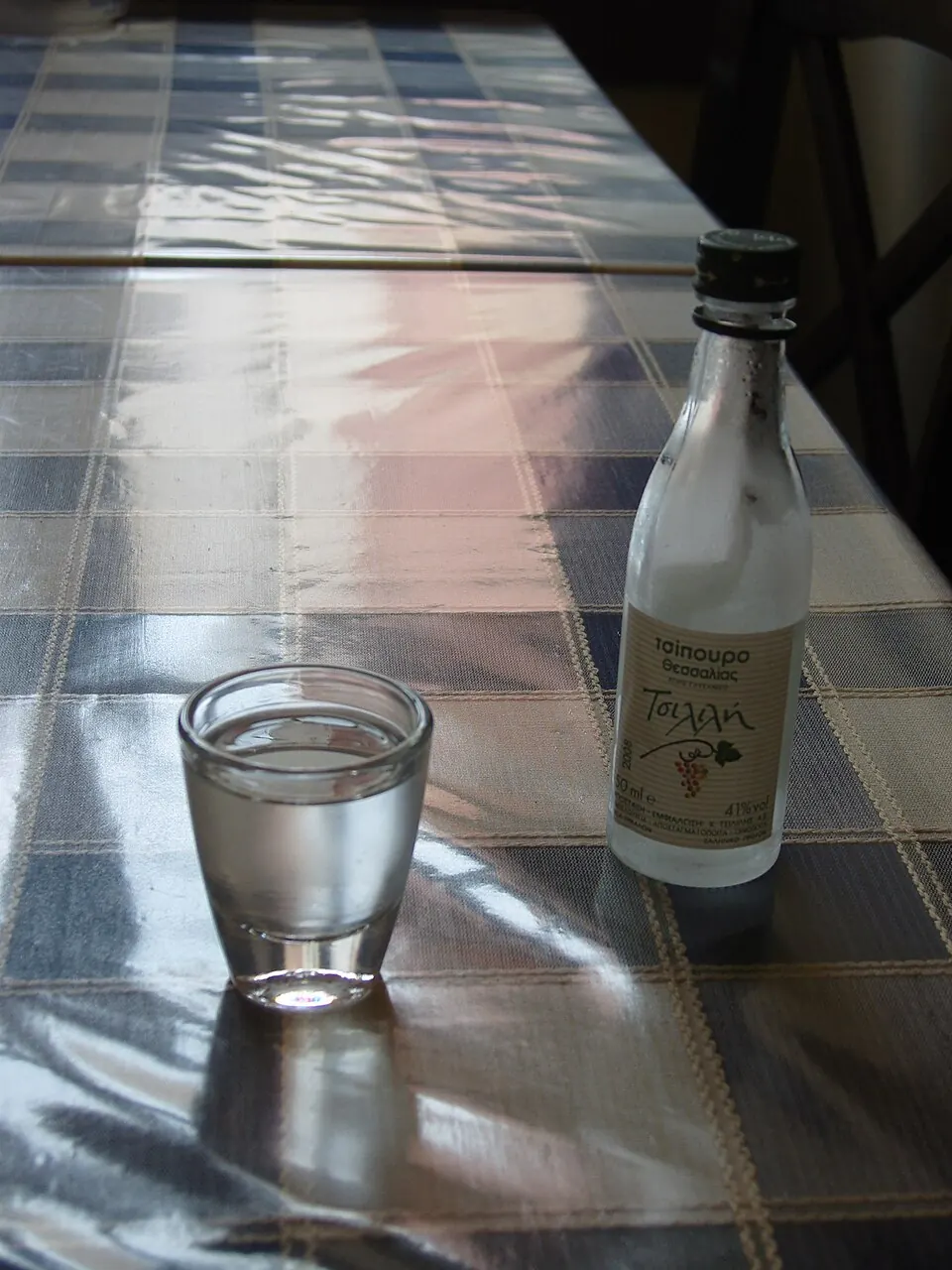

Tsipouro is an un-aged brandy from Greece, typically made from grape pomace through a double distillation process. This spirit has an alcohol content of 40-45% by volume and comes in pure or anise-flavored varieties.
How it is made
Tsipouro is produced by fermenting grape pomace, which is then distilled twice. During distillation, the first and last batches are discarded, keeping only the intermediate 'heart' batch. Some producers use the entire pulp without extracting must for wine, creating a superior product called 'apostagma'. The distillate is left to mature in stainless steel tanks or aged in wooden barrels for an aged version similar to whiskey.
History
According to tradition, tsipouro was first produced in the 14th century by Greek Orthodox monks on Mount Athos in Macedonia, Greece. The spirit has been part of Greek culture for centuries and was granted PDO (protected designation of origin) status in 2006.
Types and styles
Tsipouro comes in two main varieties: pure (the traditional form) and anise-flavored (a more recent addition from the 1900s). While typically not aged, barrel-aged versions are also available. It is similar to Cretan tsikoudia but differs in being double-distilled and sometimes containing additional flavorings like anise.
How it is served
Tsipouro is served chilled in shot glasses, often with meze such as nuts, cheese, olives, or dried fruit. It can be consumed straight, diluted with water, or over ice. In Greece, it's commonly enjoyed at social gatherings and may replace coffee or wine depending on the time of day.