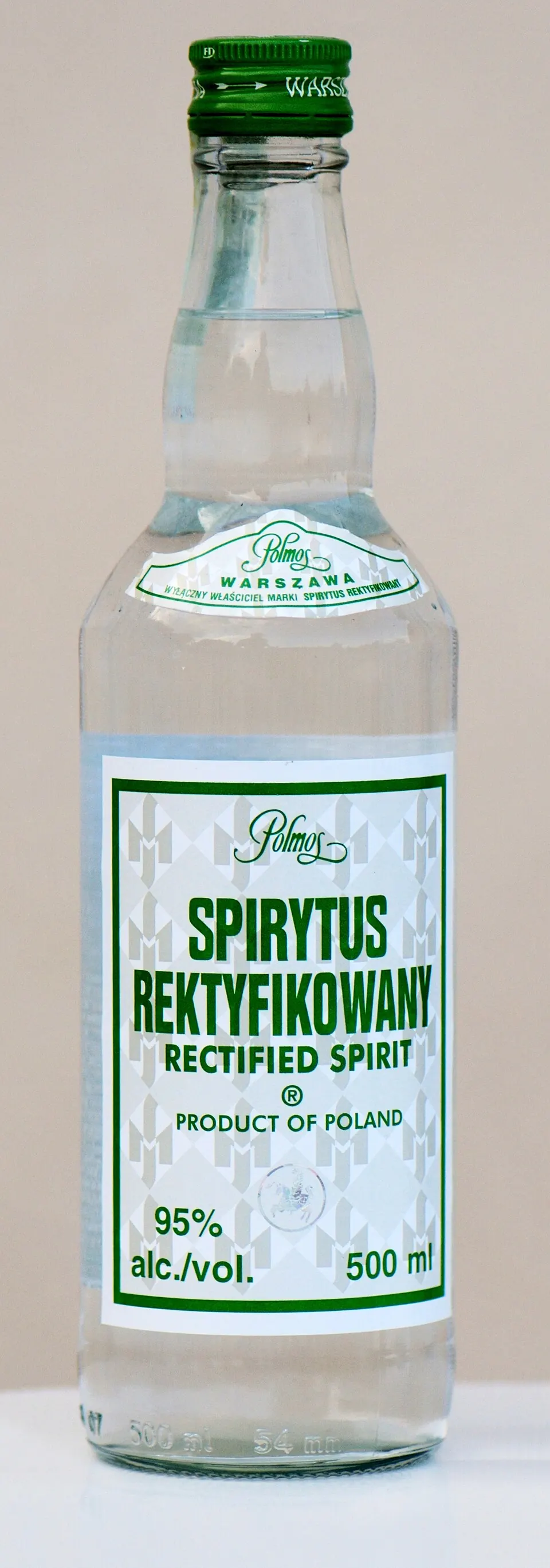

Rectified spirit, also known as neutral spirits, is highly concentrated ethanol purified through repeated distillation. It is typically produced at 96-96.5% ABV and can be made from various agricultural sources including grains, corn, grapes, and sugarcane.
How it is made
Rectified spirit is created through a process called rectification, which involves repeated distillation to achieve high purity. The practical limit of purity using conventional distillation is 97.2% ABV, though it's typically produced at 96-96.5% ABV using continuous multi-column stills and diluted as needed. The process creates an azeotrope of ethanol and water at this concentration.
Types and styles
Neutral spirits can be produced from various materials including grains, corn, grapes, sugar beets, sugarcane, tubers, or other fermentable materials. When made from grain, it's called neutral grain spirit (GNS), while grape-based versions are known as grape neutral spirit or vinous alcohol. The specific raw material affects the final product's characteristics.
How it is served
Rectified spirit is generally not consumed undiluted due to its high alcohol content, which can cause alcohol poisoning more quickly than traditional spirits. It is commonly mixed with other beverages to create alcoholic punches or Jello shots, used as a substitute for other spirits in cocktails, or employed to make homemade liqueurs like limoncello and Crème de cassis. It's also used in cooking to extract flavors through its solvent properties and for medicinal tinctures.
Regional variations
In the United States, neutral spirit is legally defined as distilled at or above 95% ABV and bottled at or above 40% ABV. Retail availability varies by state, with some prohibiting high-ABV sales. In the European Union, it must meet specific purity standards including a minimum of 96% ABV. Germany calls it Primasprit or Neutralalkohol, while Poland produces Spirytus Rektyfikowany at 96% ABV. Bolivia produces cocoroco, a rectified spirit made from sugar cane or coca leaves.