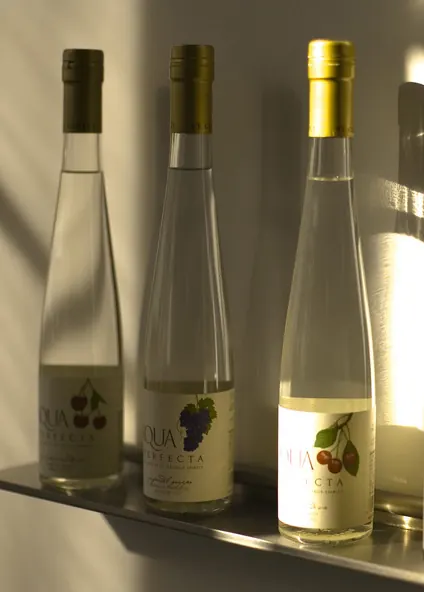

Eau de vie is a colorless fruit brandy originating in France. It's produced through fermentation and double distillation of various fruits, resulting in a light fruit flavor. This spirit is typically served after meals as a digestif.
How it is made
Traditional fruit spirits begin with ripe fruit that undergoes fermentation followed by double distillation. The distilled spirit is promptly bottled to maintain the freshness and aroma of the original fruit. Eaux de vie generally aren't aged in wooden casks, which explains their clear appearance. For fruits lacking sufficient sugar for fermentation, such as raspberries or rosehips, the spirits are created by macerating the fruit in neutral grain spirits before distillation. In the European Union, this process is legally referred to as Geist.
Types and styles
Popular varieties include pear (eau de vie de Poire Williams), raspberry (eau de vie de framboise), apple (eau de vie de pomme), mirabelle plum, and peach. When produced from pomace, it is known as pomace brandy or marc. While most eaux de vie from Alpine regions are briefly stored in glass containers, some undergo aging in wooden casks. Calvados, an apple-based spirit from northwestern France, requires a minimum of two years in wood. Caribbean versions utilize tropical fruits like banana, mango, and pineapple, while Acerum represents a Canadian variant made from maple syrup.
How it is served
Due to its high alcohol content, an eau de vie is typically served as a digestif in 30 to 60 ml portions. It is consumed after a meal following wine or another alcoholic beverage. The spirit is served cold and occasionally appears in traditional French recipes for deglazing, either in place of or together with white wine.
Kinds of eau de vie
- Calvados (35 cocktails)
Other styles
- Lambig (France)
- Acerum (Canada)