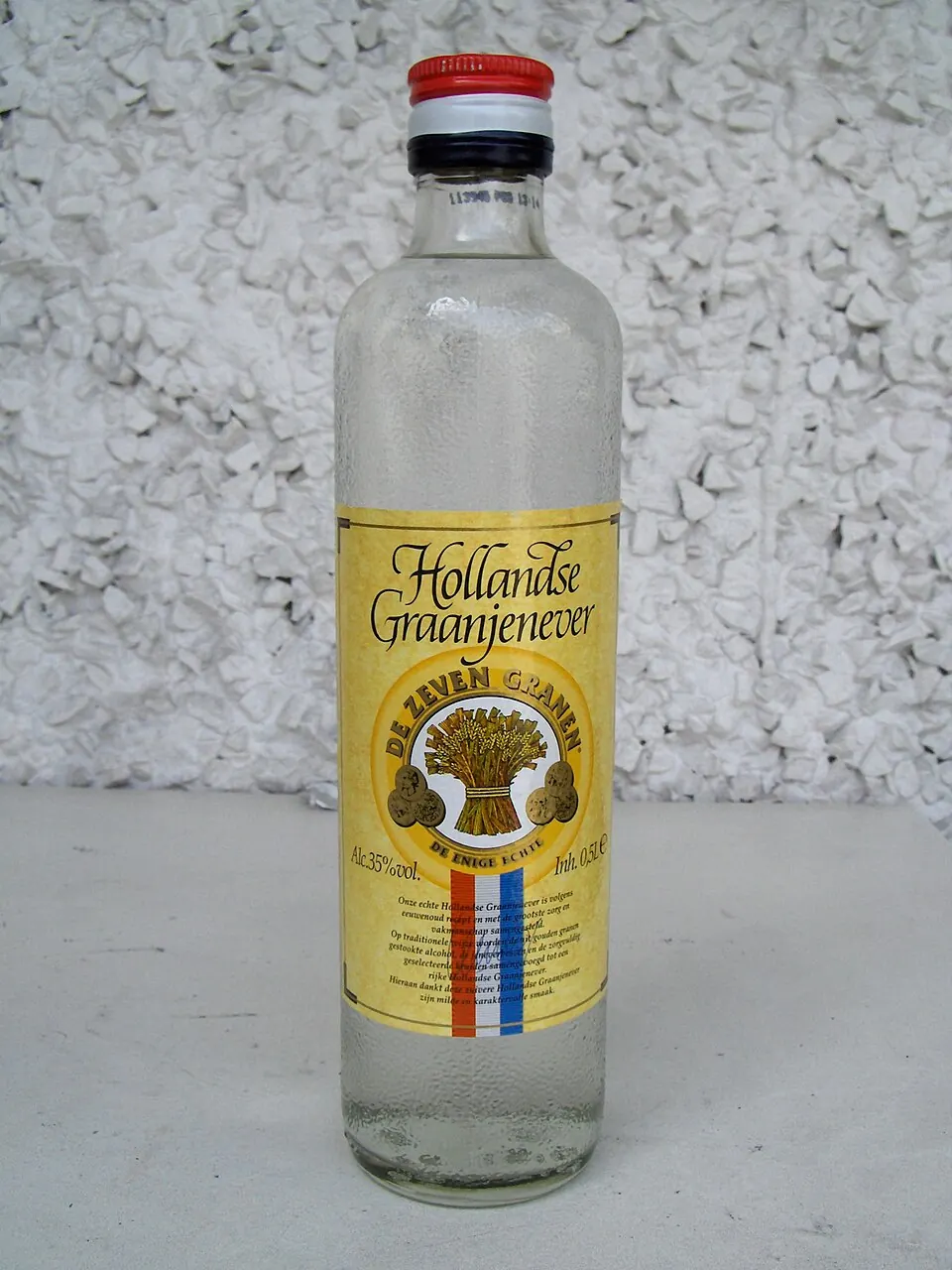

Jenever is a traditional spirit from the Low Countries, made from distilled fermented grain mash flavored with juniper berries and other spices. It typically has an alcohol content of 30%.
How it is made
Jenever production involves distilling fermented grain mash with juniper berries and other spices. The process begins with making malt spirit which is diluted to about 45% alcohol. This mixture is then distilled with spices, sometimes placed on special trays above the spirit. After distillation, jenever is filtered, diluted to the desired strength, and may be aged in oak barrels.
History
Jenever originated in the Netherlands and Belgium, with its history dating back to the 16th century. It was reportedly created by a Dutchman named Sylvius Franciscus as a remedy for stomach ailments. The Bols family began producing it on an industrial scale in Amsterdam in 1575. During the Thirty Years' War, British soldiers used this warming drink, which they called 'Dutch Courage,' and brought it to England, where it eventually evolved into gin.
Types and styles
Jenever comes in different varieties based on composition and aging. Graanjenever is made entirely from grains and contains at least 30% alcohol. Korenwijn contains at least 51% malt spirit with minimal sugar and is aged in oak barrels. By age, there are three main types: Jonge (young), which is drier and sharper; Oude (old), aged for several years with an amber color; and Zeer Oude (ZO), the oldest and most expensive, often sold in clay bottles.
How it is served
Zeer Oude jenever is typically served very cold in small glasses as a digestif. Young jenever is used like gin in mixed drinks with lemon juice, tonic, and other mixers. In the Netherlands and Belgium, jenever is sometimes consumed with beer or added to coffee.
Adapted from the Russian Wikipedia article Женевер, available under CC BY-SA 4.0.
Styles and varieties
- Peket (Belgium)