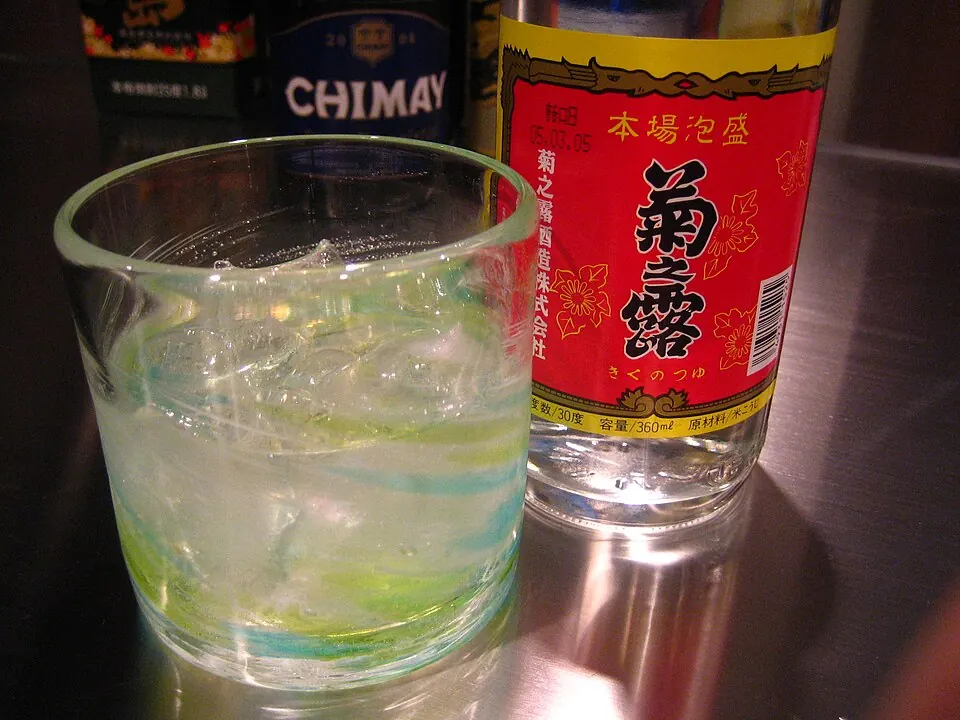

Awamori is a distilled rice wine originating from the Okinawa archipelago in Japan. Made from long-grain imported rice and unique black yeast, it typically has an alcohol content of 30-60% ABV.
How it is made
Awamori is produced using exclusively long-grain rice, primarily imported from Thailand. The rice is soaked, steamed, and fermented with a special local black yeast for at least two weeks. The fermented mixture is then distilled once in a pot still, resulting in a clear spirit that is typically aged in ceramic containers. Common varieties are aged about six months, while premium 'kusu' varieties are aged three years or more.
History
Awamori production began in the Ryukyu Kingdom in the 15th century, with technology borrowed from Southeast Asian cultures. Initially produced for royalty, with rights granted to 30 distillers by royal decree, it later became popular throughout the Ryukyu islands. Despite Japanese annexation in 1879, it remained popular on Okinawa but didn't spread widely to mainland Japan. Significant reserves of aged awamori were destroyed during the Battle of Okinawa in 1945.
Types and styles
Awamori varieties range from standard 30-43% ABV to stronger versions like 'hanadzaké' from Yonaguni Island. Premium 'kusu' varieties are aged at least three years, though some much older varieties exist. Most awamori is unflavored, though some varieties include spices, ginseng, or even preserved snakes. It is distinct from shochu, which uses short-grain Japanese rice and lighter yeast.
How it is served
Awamori is typically served in small glasses, either straight with ice or diluted with cold water. It's enjoyed as an aperitif or with meals. On Okinawa, it's traditionally served in small ceramic cups resembling thimbles. Occasionally it's used in cocktails with citrus juices. A unique tradition involves purchasing decorative bottles for newborns, which are stored until the child's 20th birthday for celebration.
Adapted from the Russian Wikipedia article Авамори, available under CC BY-SA 4.0.