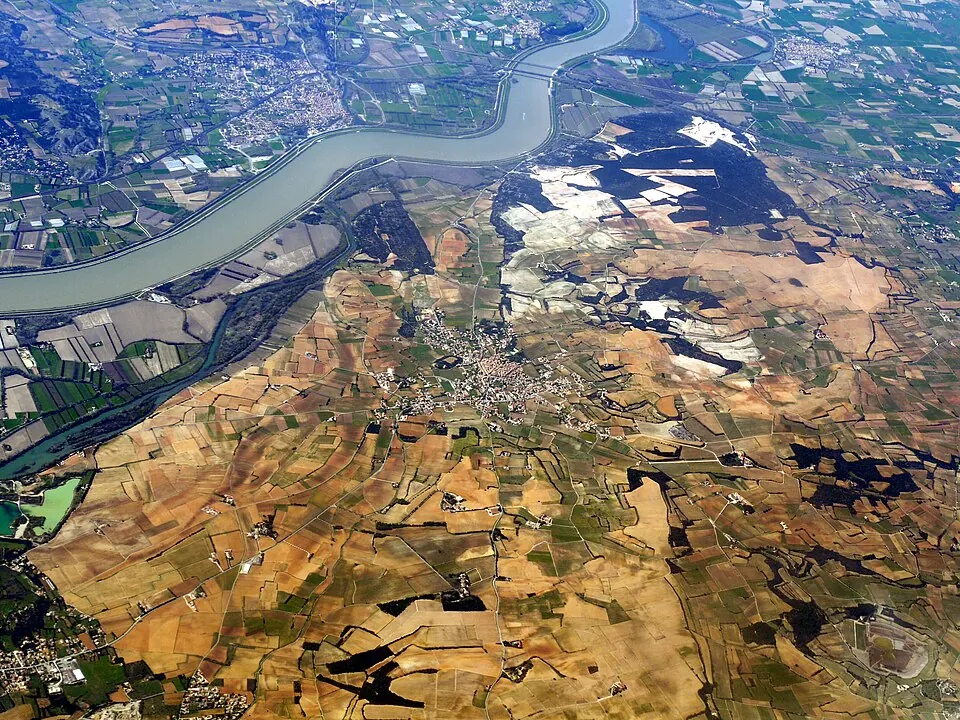

Châteauneuf-du-Pape is a French wine from the Rhône Valley, made primarily from Grenache grapes with other varieties allowed. It comes from around Châteauneuf-du-Pape village and typically has an alcohol content of 12.5-15.5%.
History
The name Châteauneuf-du-Pape translates to "The Pope's new castle" and is linked to papal history. When Pope Clement V moved the papacy to Avignon in 1309, the subsequent popes promoted local viticulture. John XXII regularly drank wines from the vineyards north of Avignon, which became known as "Vin du Pape" and later "Châteauneuf-du-Pape". The appellation established the first AOC rules in France in 1923, later enshrined in law in 1936.
Geography and Terroir
The appellation covers 3,200 hectares between Avignon and Orange, with three distinct soil types. The northern part features galets roulés, round quartzite pebbles that retain heat, aiding grape ripening. These stones also help retain moisture during dry summers. The powerful mistral wind intensifies the dry climate. La Crau is one of the most famous vineyards, rich in these pebbles.
Production
Châteauneuf-du-Pape can be red or white wine, with red being predominant. The appellation allows eighteen grape varieties, though Grenache noir dominates at 72% of plantings. Red wines typically feature Grenache, Syrah, and Mourvèdre, producing earthy flavors with hints of tar and leather that age well. White wines use six permitted varieties, with Grenache blanc and Roussanne providing fruitiness while Bourboulenc and Clairette add acidity. The wines are high in alcohol, typically 14-15.5%, with no chaptalization allowed.