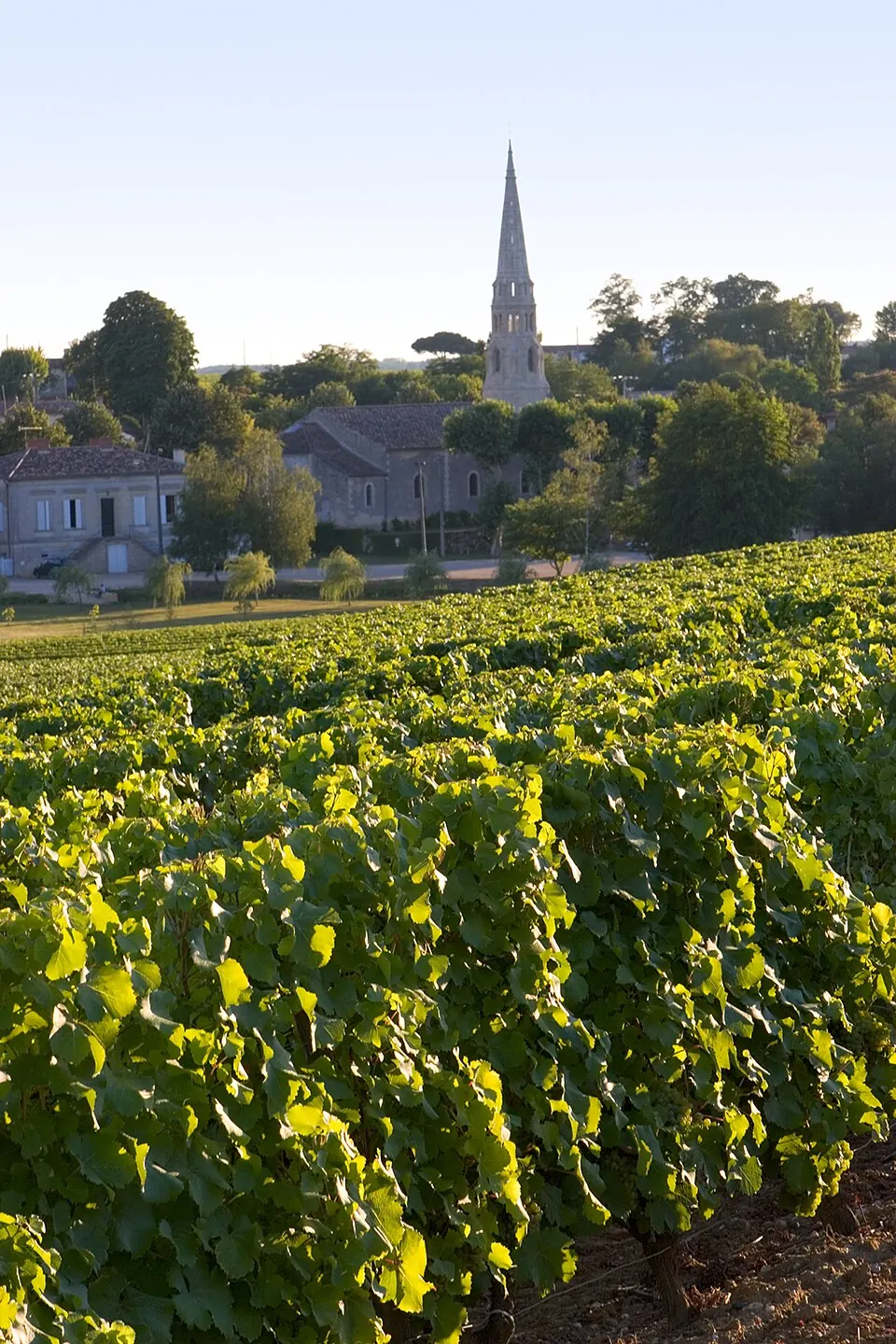

Sauternes is a French white dessert wine produced in the Bordeaux region. It is made from Semillon, Sauvignon Blanc, and Muscadelle grapes affected by noble rot, resulting in a concentrated, sweet wine with an expressive aroma.
How it is made
Sauternes is made from grapes affected by Botrytis cinerea, a beneficial fungus that causes partial dehydration of the berries. This process concentrates the sugars and flavors. The wine typically contains 75-90% Semillon, with Sauvignon Blanc providing acidity and Muscadelle adding aromatic qualities when used.
Geography and climate
The Sauternes region is located 40 km southeast of Bordeaux along the Garonne and Ciron rivers. The temperature difference between these rivers creates morning fog in autumn, which is essential for the development of Botrytis. The region includes five communes: Barsac, Sauternes, Bommes, Fargues, and Preignac.
Classification
In the 1855 Bordeaux classification, Château d'Yquem was classified as Premier Cru Supérieur. Eleven estates were classified as Deuxièmes Crus and fifteen as Troisièmes Crus. Barsac, located within the Sauternes region, can label its wines as either Sauternes or Barsac AOC.
How it is served
Sauternes is typically served chilled at around 11°C, though older wines (over 15 years) may be served slightly warmer. It is traditionally paired with foie gras but also complements various dishes. The wine is sold in both standard 750ml bottles and half-bottles (375ml).
Adapted from the Russian Wikipedia article Сотерн (вино), available under CC BY-SA 4.0.