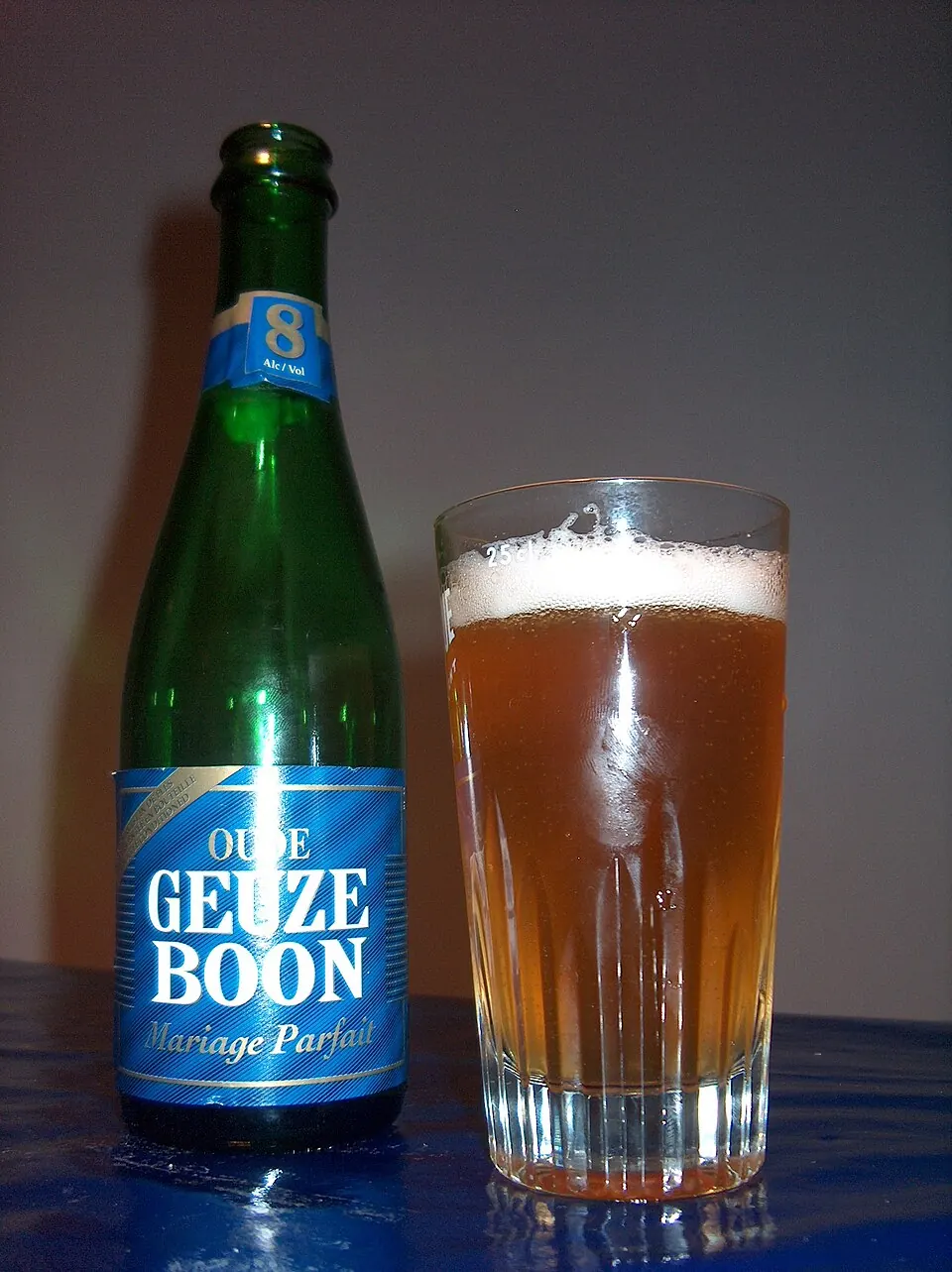

Gueuze is a type of Belgian lambic beer created by mixing young and aged lambics. It undergoes secondary fermentation in the bottle, resulting in a carbonated, dry beer with earthy flavors and 7% alcohol by volume.
How it is made
Gueuze is produced by blending two or more types of lambic with different aging periods. Typically, it consists of 50% one-year-old lambic, 25% two-year-old, and 25% three-year-old. Some brewers use different ratios, such as 2/3 young lambic with 1/3 aged, or as little as 10% young lambic. The young lambics contain fermentable sugars that allow for secondary fermentation in the bottle.
History
Gueuze's popularity in Belgium declined until the 1990s, but has since rebounded from 1,500 hectoliters in the early 1990s to 6,000 hectoliters by 2006. To combat the addition of sweeteners by some producers, the Hoge Raad voor Ambachtelijke Lambikbieren association was formed in the late 1990s to protect traditional production methods. Traditional gueuze made without sweeteners is often labeled as Oude.
Types and styles
Gueuze is sometimes called 'Belgian Champagne' due to its carbonation. It is typically a dry beer with a sharp, earthy taste similar to lambic but with more complexity from higher carbonation levels.
How it is served
Gueuze is traditionally served only in bottles, not on draft. It is used in traditional Belgian cuisine for dishes such as mussels with gueuze, lamb liver with gueuze and mustard, goose feet cooked in gueuze, chicken in gueuze jelly, and various sauces, dressings, and desserts.
Adapted from the Russian Wikipedia article Гёз (пиво), available under CC BY-SA 4.0.