.jpg)
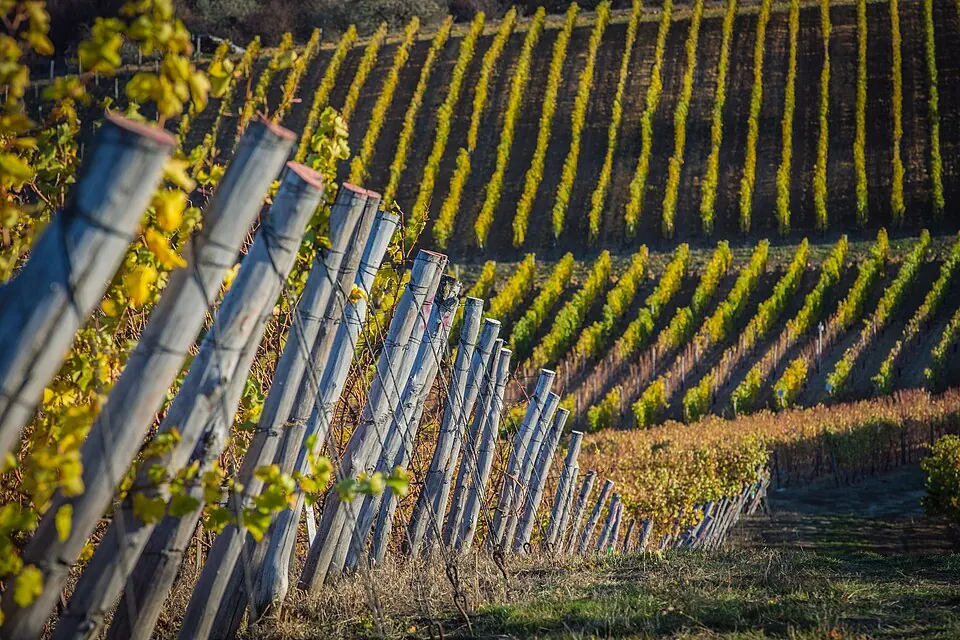
Moldovan wine is produced from grapes grown in Moldova. The country has a long winemaking tradition dating back 4,000-5,000 years. Most wine produced in Moldova is exported.
History
The history of winemaking in Moldova dates back 4,000-5,000 years between the Dniester and Prut rivers. The industry developed significantly during the 14th and 15th centuries under Prince Stephen III the Great, who imported high-quality grape varieties. Wine was a leading export from the Moldavian Principality to Poland, Ukraine, and Russia during the Middle Ages. The Ottoman Empire's 300-year rule caused a deep decline in winemaking as it was prohibited by law. After the Treaty of Bucharest in 1812, the wine industry began to recover again.
How it is made
Moldovan wine is made from various grape varieties, both native and imported. Traditional white varieties include Fetească Albă and Fetească Regală, while Rara Neagră is a notable red variety. Imported varieties such as Chardonnay, Sauvignon Blanc, Cabernet Sauvignon, and Merlot are also cultivated. The wine is produced in different regions, including the famous Purcari micro-zone in the southeast.
Types and styles
Moldovan wine includes both traditional and international varieties. The country produces white, red, and rosé wines. Traditional wines include Negru de Purcari and Romanesti, which made Bessarabia known as a wine producer. Moldova has the largest wine collection in Europe at Milestii Mici, with its cellars stretching 200 kilometers, though only 50 kilometers are currently in use.
How it is served
Moldovan wine is served in various ways depending on the type and occasion. White wines are typically chilled and served as aperitifs or with light dishes, while red wines are served at room temperature with meals. The wine is also used in traditional celebrations and is an important part of Moldovan culture.
Adapted from the Russian Wikipedia article Виноделие в Молдове, available under CC BY-SA 4.0.