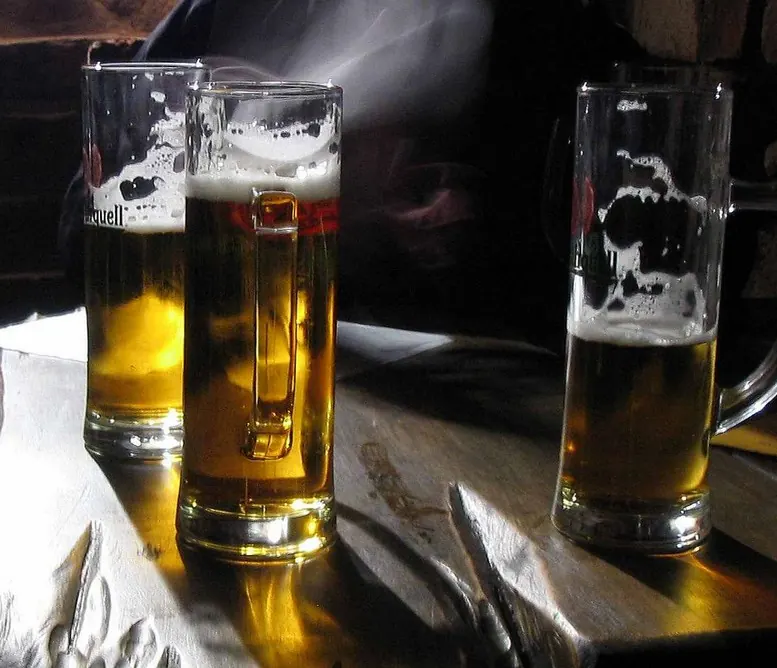

Pilsner is a type of pale lager beer that originated in Pilsen, Czech Republic. It is made with pale malt, noble hops, and soft water, typically with an alcohol content between 4.2% and 5.4%.
History
In 1838, frustrated with the declining quality of beer in Pilsen, city authorities decided to build a new brewery that would brew beer according to Bavarian methods. They invited Bavarian brewer Josef Groll, who in 1842 produced the first batch of pilsner using pale malt, Saaz hops, and the city's soft water. This new style of beer quickly gained popularity across Europe. In 1859, the Pilsner Bier trademark was registered, and in 1898, the Pilsner Urquell brand was introduced, meaning 'original source of pilsner' in German.
Types and styles
Pilsner is traditionally divided into Czech (Bohemian) and German styles. Czech pilsners are characterized by a rich, complex malt character combined with a soft, rounded bitterness from Saaz hops. German pilsners tend to be drier, hoppier, and more bitter. In the United States, pilsners were adapted with the addition of rice or corn to lighten the body. International-style pilsners emerged after World War II as simpler, cheaper versions often with adjuncts like rice, corn, or corn syrup. Modern craft variations include hoppy pilsners with dry-hopping and American or New Zealand hops.
How it is served
Pilsner is typically served in tall, narrow glasses to showcase its golden color and maintain its dense, white head. It can be enjoyed on its own or paired with various foods. On this site, pilsner is used in the Americano Perfecto and One-two Punch cocktails.
Adapted from the Russian Wikipedia article Пильзнер, available under CC BY-SA 4.0.
Well-known brands
- Stella Artois (Belgium)
- Heineken (Netherlands)
- 1664 (France)
- Skol (Scotland)
- Natural Light
- Ožujsko (Croatia)
- Three Horses Beer (Madagascar)
- Maes pils
- Xibeca
- Cara Pils (Belgium)
- Efes Pilsen (Turkey)