.jpg)
Soju is a traditional Korean spirit made primarily from sweet potato or grain. It is a clear liquid with a characteristic alcohol aroma and a slightly sweet taste, with alcohol content ranging from 13% to 45%, though the most popular variety contains 20% alcohol.
History
Soju first appeared around 1300 during the Mongol invasion of Korea. The Mongols introduced distillation technology, which they had acquired from Persia during their campaigns in Central Asia. From 1965 to 1991, due to a government policy to reduce rice consumption, traditional grain distillation was banned, leading to the production of diluted soju with added flavorings.
How it is made
Pure soju is made from sweet potato and grains like rice and wheat. The production process involves grinding and pressing the raw materials, preparing a mash that ferments to accumulate ethyl alcohol, and then distilling the mash into the final product. The soju is filtered through bamboo charcoal for optimal purification.
How it is served
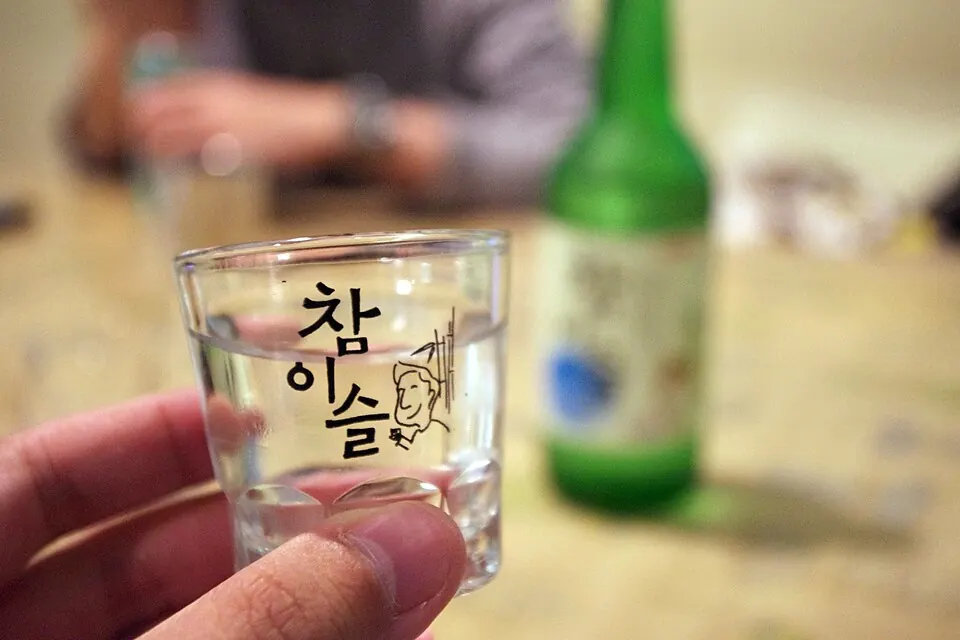
Soju is often diluted with Sprite, tonic, or syrup, and may have added flavors like lemon, melon, or watermelon. While rarely used in cocktails in the past, this practice has become more common recently. In Korea, soju is traditionally served in small glasses and consumed with meat or fish dishes. The drinking etiquette involves pouring with two hands, not pouring for oneself, and drinking in one go before refilling.
Adapted from the Russian Wikipedia article Соджу, available under CC BY-SA 4.0.
Styles and varieties
- Andong soju (South Korea)
Well-known brands
- Chamisul (South Korea)