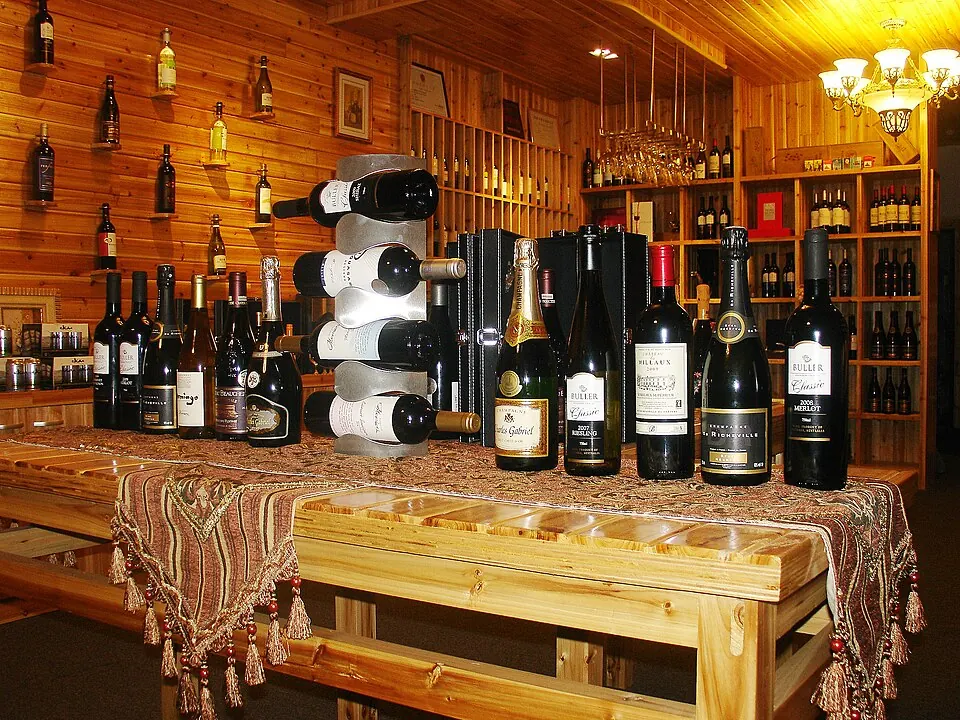

Chinese wine production has a history spanning over four thousand years. The country produces grape wine, fruit wines like lychee wine, and grain-based beverages such as Huangjiu and Baijiu.
History
Wine production in China began more than four thousand years ago. Archaeologists discovered ceramic pots containing alcoholic beverages, including wine, dating back to the Bronze Age. During the Han Dynasty, winemaking developed through cultural exchanges with Central Asian countries. Emperor Tai-zong of the Tang Dynasty promoted wine after a military campaign, and poets of that era celebrated wine made from the maru grape variety.
Modern Production
Modern Chinese winemaking began in 1892 when Zhang Bishi established vineyards in Shandong province and introduced European grape varieties. Foreign wines started entering China in the late 20th century. By 2005, about 90% of grape wine on the domestic market was Chinese-produced. Major producers include Great Wall Wine, Tonghua Grape Wine, and Changyu.
Winemaking Regions
Wine is produced throughout China, with major regions including Beijing, Yantai in Shandong, Zhangjiakou in Hebei, Yibin in Sichuan, Tonghua in Jilin, Taiyuan in Shanxi, and Ningxia-Hui Autonomous Region. Shandong province accounts for about 40% of China's wine production. The Xinjiang-Uyghur Autonomous Region has its own winemaking traditions, including special Uyghur wines.
Market Characteristics
China is consistently among the top ten countries for wine exports and imports. Red wine is preferred over white wine, with China being a global leader in red wine sales by volume. However, per capita consumption remains low at 0.35 liters per person. Wine is typically sold in bottles in small restaurants, while larger establishments may serve it by the glass using standard wine glasses or small glasses for baijiu.
Adapted from the Russian Wikipedia article Виноделие в Китае, available under CC BY-SA 4.0.