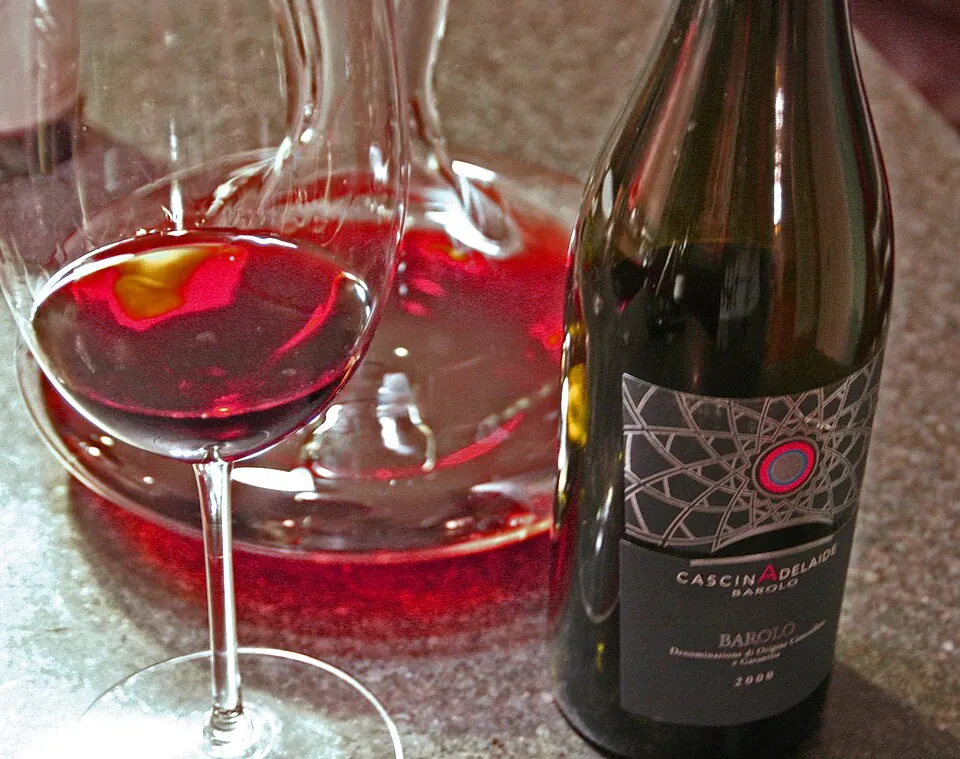

Barolo is a prestigious red wine produced in the Piedmont region of Italy from Nebbiolo grapes. It has a minimum alcohol content of 12.5% and is known for its high tannin content and aging potential.
How it is made
Barolo is aged for a minimum of 3 years, with 18 months spent in oak barrels. A Riserva designation is used for wines aged 5 years, with 2 years in oak. Due to its high tannin content, Barolo is rarely consumed less than 10 years after harvest. To soften the tannins, double decanting is recommended before serving.
History
Until the mid-19th century, Barolo was a sweet wine. The transition to dry Nebbiolo wine is associated with Camillo Benso, Count of Cavour, and Juliette Falletti, Marchioness of Barolo. French winemaker Louis Oudart developed production methods based on Bordeaux traditions. In the 1970s, some producers began using shorter maceration periods and smaller French oak barrels, leading to the 'Barolo Wars' between traditionalists and modernists.
Types and styles
Barolo is produced in 11 communes: Barolo, La Morra, Castiglione Falletto, Monforte d'Alba, Serralunga d'Alba, Roddi, Verduno, Cervasca, Grinzane Cavour, Diano d'Alba, and Novello. Each commune has its own style and terroir, resulting in noticeable differences between wines. The vineyards were designated a UNESCO World Heritage site in 2014 as part of the 'Langhe-Roero and Monferrato vineyard landscape'.
Characteristics
Young Barolo has a cherry-ruby color with garnet hues. It is astringent due to high tannins. Aromas include cherry, raspberry, rose petals, and sometimes white pepper. With age, the wine darkens and develops notes of licorice, chocolate, and vanilla. Alcohol content is typically above 15%, despite the minimum requirement of 12.5%.
Adapted from the Russian Wikipedia article Бароло, available under CC BY-SA 4.0.