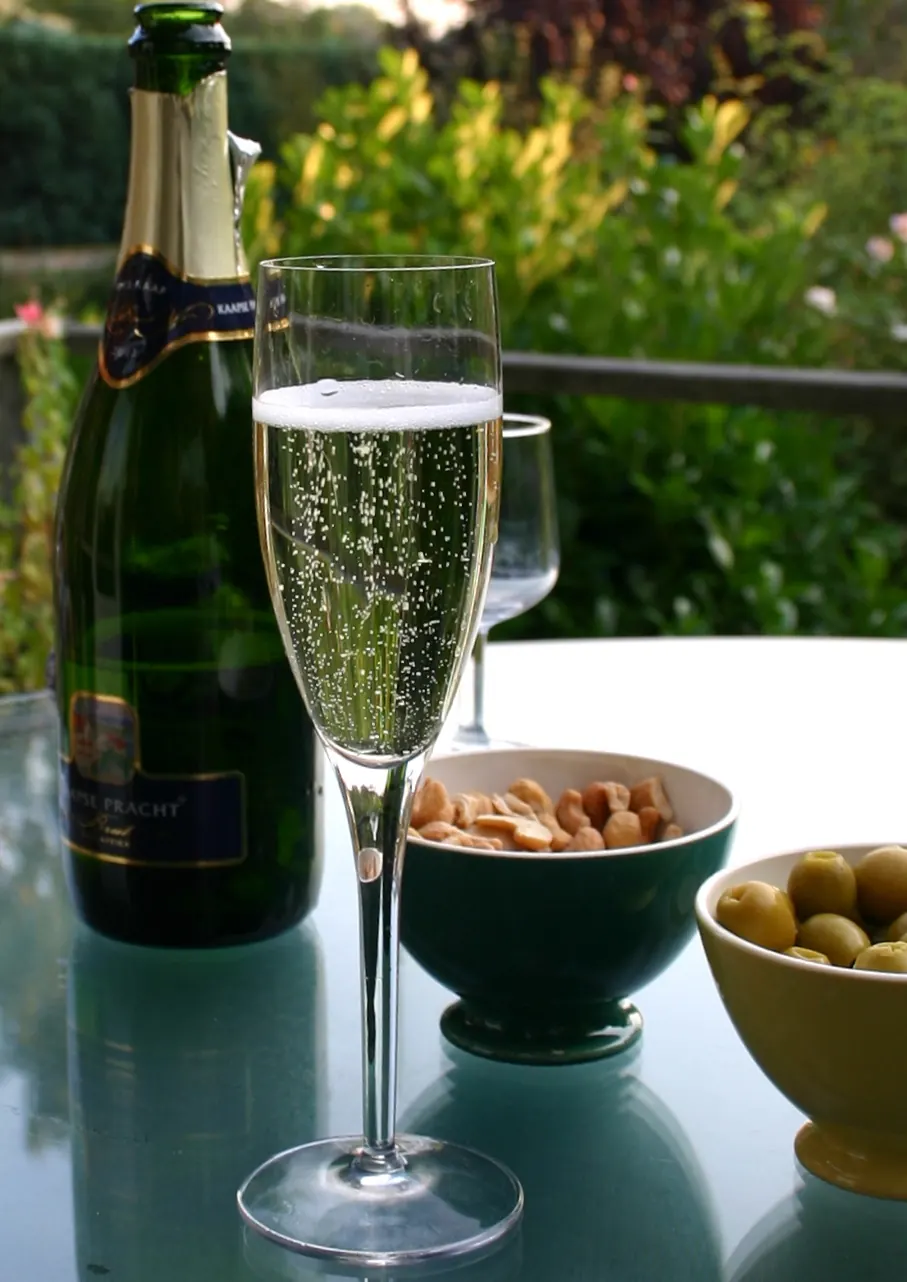

Champagne is a sparkling wine made from grapes grown in the Champagne region of France. It is typically produced from Chardonnay, Pinot Noir, and Pinot Meunier grapes and has an alcohol content of around 12%.
How it is made
Champagne is made using the traditional method called 'Méthode Champenoise'. Grapes are harvested earlier than usual to maintain high acidity. The juice undergoes initial fermentation in barrels or tanks to create a base wine. This wine is then blended with wine from different vineyards and years. A mixture of yeast and sugar called tirage is added, and the wine is bottled for secondary fermentation, where carbon dioxide is trapped in the bottle. After aging, the bottles undergo riddling to move sediment to the neck, which is then removed through disgorgement. Finally, a small amount of sugar solution is added before corking.
History
Wines from the Champagne region have been known since before the Middle Ages. Monks produced wine for religious ceremonies, and champagne was part of royal coronation celebrations. The first commercial sparkling wine was produced around 1535. Contrary to popular belief, Dom Pérignon did not invent champagne but made significant improvements to its production. In the 19th century, Veuve Clicquot developed the riddling process to clarify the wine, and Victor Lambert developed malolactic fermentation, which led to the creation of brut champagne.
Types and styles
Champagne can be blanc de blancs (made only from Chardonnay) or blanc de noirs (made from red grapes). Rosé champagne is made either by extending skin contact or by adding a small amount of red wine. The sweetness levels vary from doux (sweet) to brut nature (no sugar added). Brut is the most common style worldwide. Vintage champagne is made from grapes of a single exceptional year, while non-vintage champagne is a blend of multiple years.
How it is served
Champagne is served chilled and can be enjoyed on its own or with food. It is also used in cocktails such as Airmail, Buck's Fizz, Kir Royal, and Corpse Reviver #3. The proper glass for champagne is a tulip-shaped flute that helps preserve the bubbles and concentrate the aroma.
Adapted from the Russian Wikipedia article Шампанское, available under CC BY-SA 4.0.
Styles and varieties
- Sec
- Brut
Well-known brands
- Dom Pérignon (France)
- Cristal