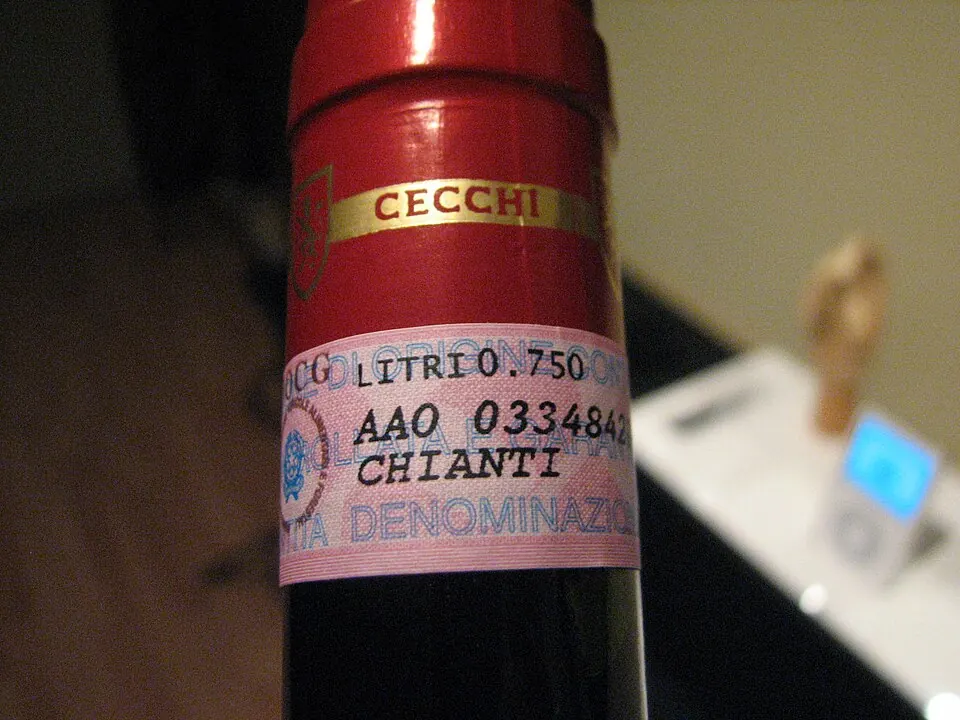

Chianti is a dry red wine produced in Tuscany, Italy, primarily from Sangiovese grapes (at least 80%). It typically has an alcohol strength of 12-14%.
History
The name Chianti comes from the hilly region of Chianti in Tuscany. Documents mention wine with this name as early as the 14th century. In 1716, Grand Duke Cosimo III de' Medici established the first official boundaries for the Chianti wine region. Baron Bettino Ricasoli later developed the Chianti formula, with Sangiovese as the main grape (at least 70%). In 1932, the original Chianti region became known as 'Chianti Classico', and new zones were added to the Chianti designation.
How it is made
Chianti is traditionally aged in large Slavonian oak barrels for 4-7 months. For higher quality categories like Riserva, the wine must be aged in oak for at least 38 months. Since 1995, Chianti can be made without white grape varieties, even entirely from Sangiovese. Chianti Classico wines must contain at least 80% Sangiovese, with no more than 20% other black grape varieties permitted.
Types and styles
Chianti Classico is a small, highly regarded sub-zone with DOCG status, located between Florence and Siena. It features a black rooster seal on its labels. Chianti Classico wines are classified into three categories based on aging: Annata (12 months), Riserva (24 months), and Gran Selezione (30 months). Regular Chianti wines are categorized as Chianti DOCG, while Chianti Superiore denotes wines made outside the Classico zone but meeting stricter quality requirements.
How it is served
Chianti is traditionally served in a distinctive flask-shaped bottle wrapped in straw called a fiasco, though many modern producers have abandoned this style. The wine is typically served at room temperature and pairs well with Italian dishes, particularly tomato-based pastas and grilled meats.
Adapted from the Russian Wikipedia article Кьянти, available under CC BY-SA 4.0.