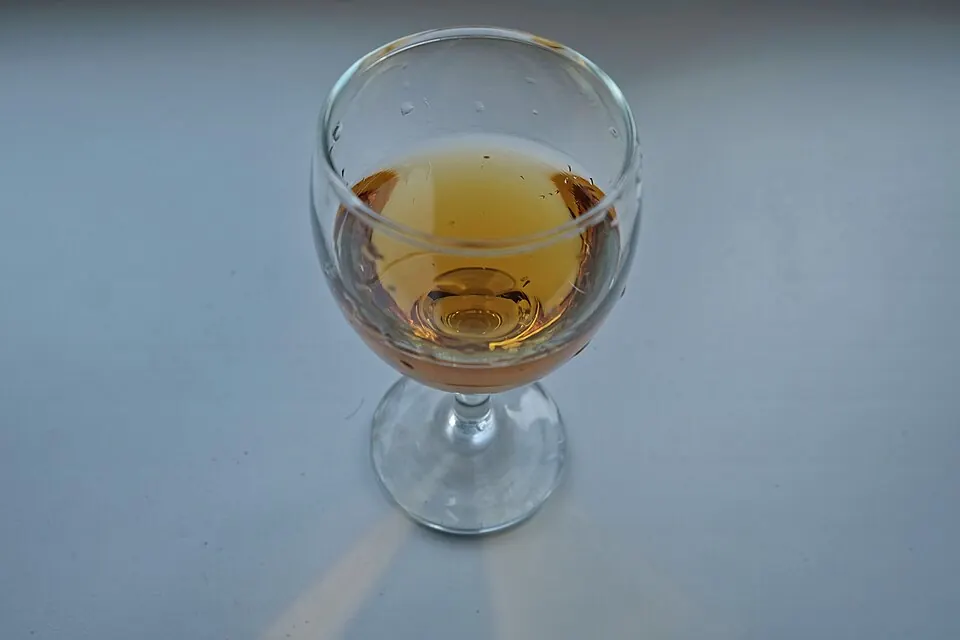

Orange wine, also known as amber wine, is a type of white wine made by keeping grape skins in contact with the juice for days or months. This method gives the wine its characteristic color and flavor profile, and it originates from Georgia.
How it is made
Orange wine differs from traditional white wine production in that the grape skins are not removed after crushing. Instead, they remain in contact with the juice during fermentation for an extended period, typically at least one month as prescribed by the International Organisation of Vine and Wine. This skin contact allows the wine to extract pigments, phenols, and tannins that are usually found in red wines.
History
The practice of making amber wine originated in Georgia, where wine has traditionally been fermented and aged in large clay vessels called qvevri, which are buried in the ground. This ancient Georgian technique gained international recognition in the late 20th century through the natural wine movement.
Types and styles
In Georgia, this type of wine is called 'k'arp'isperi ghvino', which translates to 'amber wine'. The name comes from the characteristic amber color that develops during the extended skin contact with grape juice. The term 'amber wine' has also been used in Russian poetry since the early 20th century.
Adapted from the Russian Wikipedia article Оранжевое вино, available under CC BY-SA 4.0.