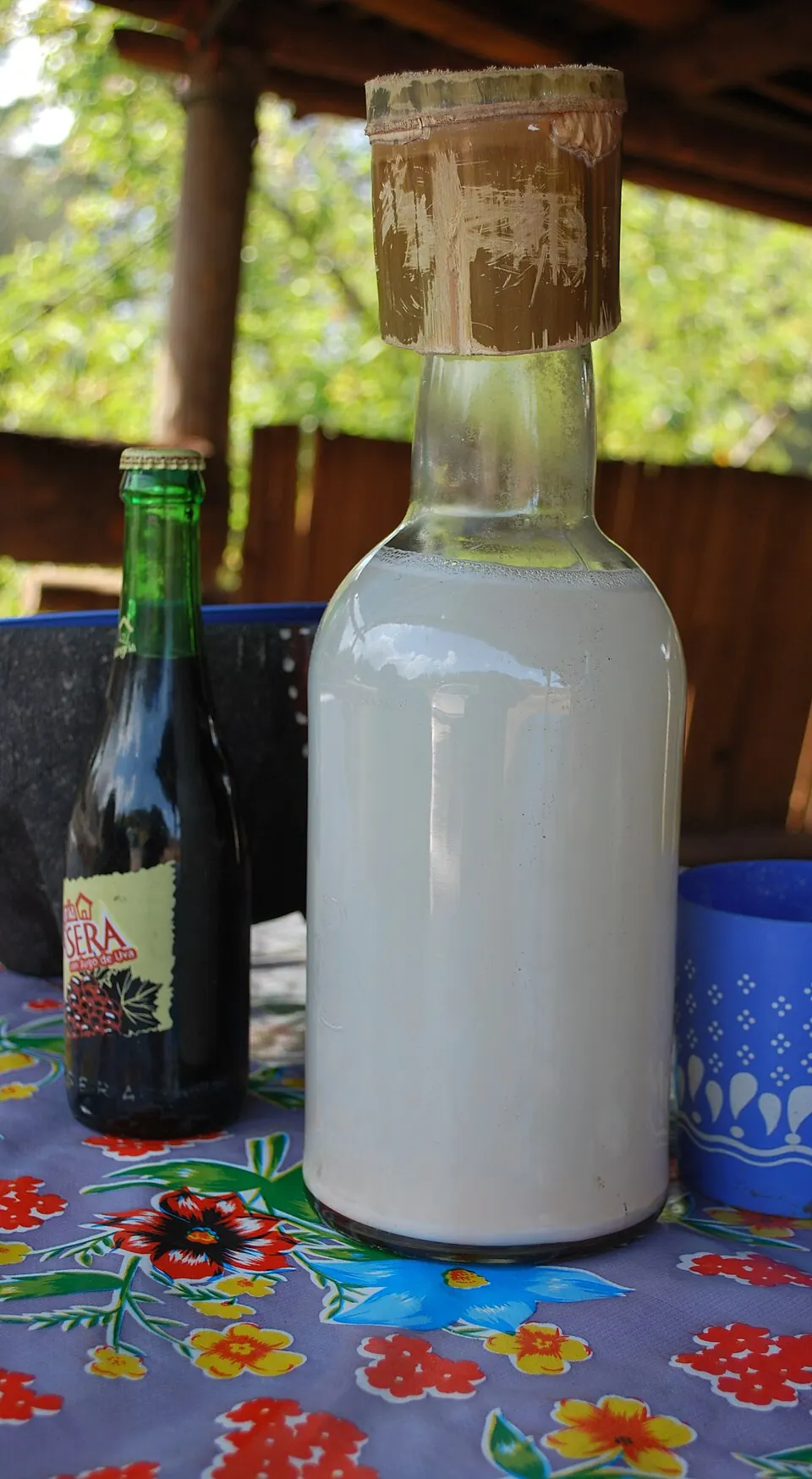

Pulque is a traditional Mexican alcoholic beverage made from fermented agave juice. It has a milky-white color, thick consistency, and slightly sour taste with 2-8% alcohol content. The drink has been produced in central Mexico for over a thousand years.
How it is made
Pulque is produced from the juice of certain species of American agave, unlike mezcal which is made from baked agave hearts. The agave plants must grow for approximately 12 years before they can be used. The process begins by cutting out the central bud of the plant, leaving a cavity where sweet juice collects for 4-6 months. This juice is then collected and transferred to fermentation tanks where mature pulque containing specific bacteria is added. Fermentation takes 7-14 days, and the final product must be consumed quickly before it spoils.
History
Pulque production dates back to pre-Columbian times in Mesoamerica, where it was considered a sacred drink consumed only by priests and select individuals. The name 'pulque' likely comes from the Nahuatl language. After the Spanish conquest, pulque became available to all social classes. Production peaked in the late 19th and early 20th centuries, but declined in the 20th century with the rise of beer and other European beverages. Despite various government campaigns against it, pulque remains part of Mexican cultural heritage.
How it is served
Traditionally, pulque is served directly from barrels using jicaras, which are half gourds used as drinking vessels. Different sizes of vessels have specific names: large two-liter vessels are called 'macetas,' one-liter ones 'cañones,' half-liter 'chivitos,' quarter-liter 'catrinas,' and eighth-liter 'tornillos.' Pulque can also be served with fruits or nuts added, known as 'curado.' The drink is typically served in green handmade glass vessels.
Adapted from the Russian Wikipedia article Пульке, available under CC BY-SA 4.0.