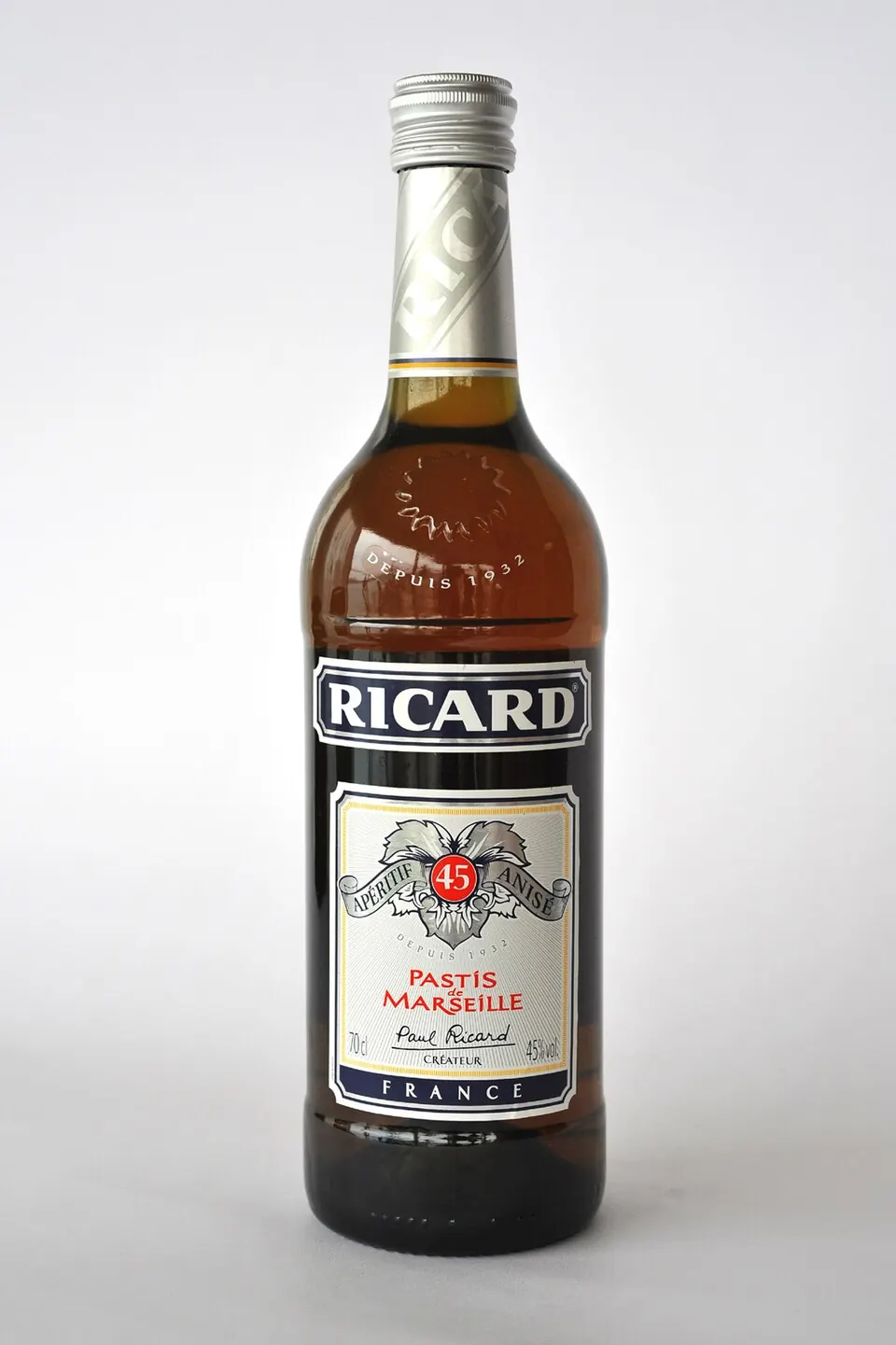

Ricard is a pastis, an anise and licorice-flavored apéritif from France with 45% alcohol by volume. Created by Paul Ricard in 1932, it is often called the 'true pastis from Marseille' and is traditionally served diluted with water and ice.
History
Ricard was created as a substitute for absinthe, which was banned in France in 1915 due to its high alcohol content and unfounded fears about its psychoactive effects. Marseille locals began making their own anise-based drinks called 'pastis' or 'tiger's milk'. Paul Ricard was introduced to this homemade version by an old shepherd and refined it in his laboratory, launching it commercially in 1932 as 'Ricard, the real pastis from Marseille.' Production was banned again during the Vichy regime's anti-alcohol laws in the 1940s but resumed in 1951.
How it is made
Ricard is made by creating an anethole essence from rectified anise, star anise, and fennel seeds. Various herbs and liquorice root are steeped with neutral alcohol. This essence and flavored alcohol are then blended with less than 100 grams of sugar per liter and caramel, which gives Ricard its distinctive yellow color. The spirit is bottled and stored above 12°C away from sunlight to prevent anethole crystallization.
How it is served
Traditionally, Ricard is served cold, diluted with chilled water at a 1-to-5 ratio (20ml Ricard to 100ml water), before adding ice cubes. The water is added first because anethole is sensitive to cold. Dilution causes the spirit to louch, turning milky, which is why Ricard is colloquially known as the 'Milk of Marseille.' It can also be used in cocktails such as Mauresque.