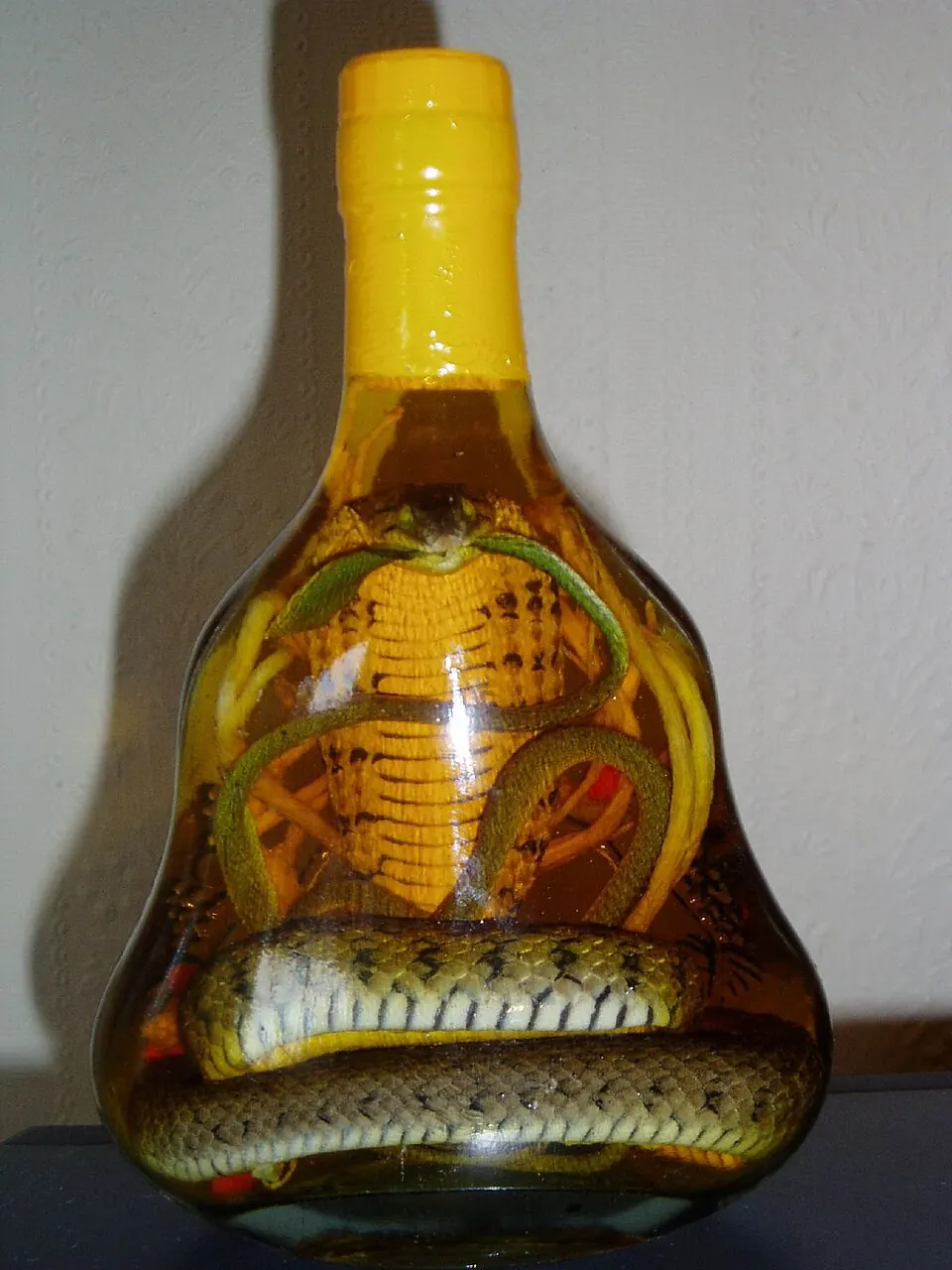

Snake wine is an exotic alcoholic beverage made by immersing a snake in rice or grain wine. It originates from China and other parts of Asia, with an alcohol content ranging from 40 to 60 percent.
How it is made
Snake wine is produced by submerging an entire snake in rice or grain wine. Sometimes a strong distillate like baijiu is used as the base. The snake, preferably venomous, is used for its flavor, aroma, and venom, which becomes denatured in the alcohol.
History
The first records of snake wine consumption date back to China's Zhou dynasty. In traditional Chinese medicine, it is believed to have healing properties and health benefits. The use of various snake parts in medicinal preparations was documented in Li Shizhen's book 'Bencao Gangmu' around 1596.
Types and styles
In Vietnam, snake wine is commonly called rượu thuốc, with less common varieties called rượu rắn. Similar beverages are made using dried geckos or seahorses. In North Korea, a snake liqueur made from vipers infused with grain alcohol is considered a delicacy.
Risks for health
Health risks associated with snake wine include potential systemic poisoning from the venom, which may affect the vascular system. This can lead to endothelial damage, platelet dysfunction, and coagulopathy.
Adapted from the Russian Wikipedia article Змеиное вино, available under CC BY-SA 4.0.