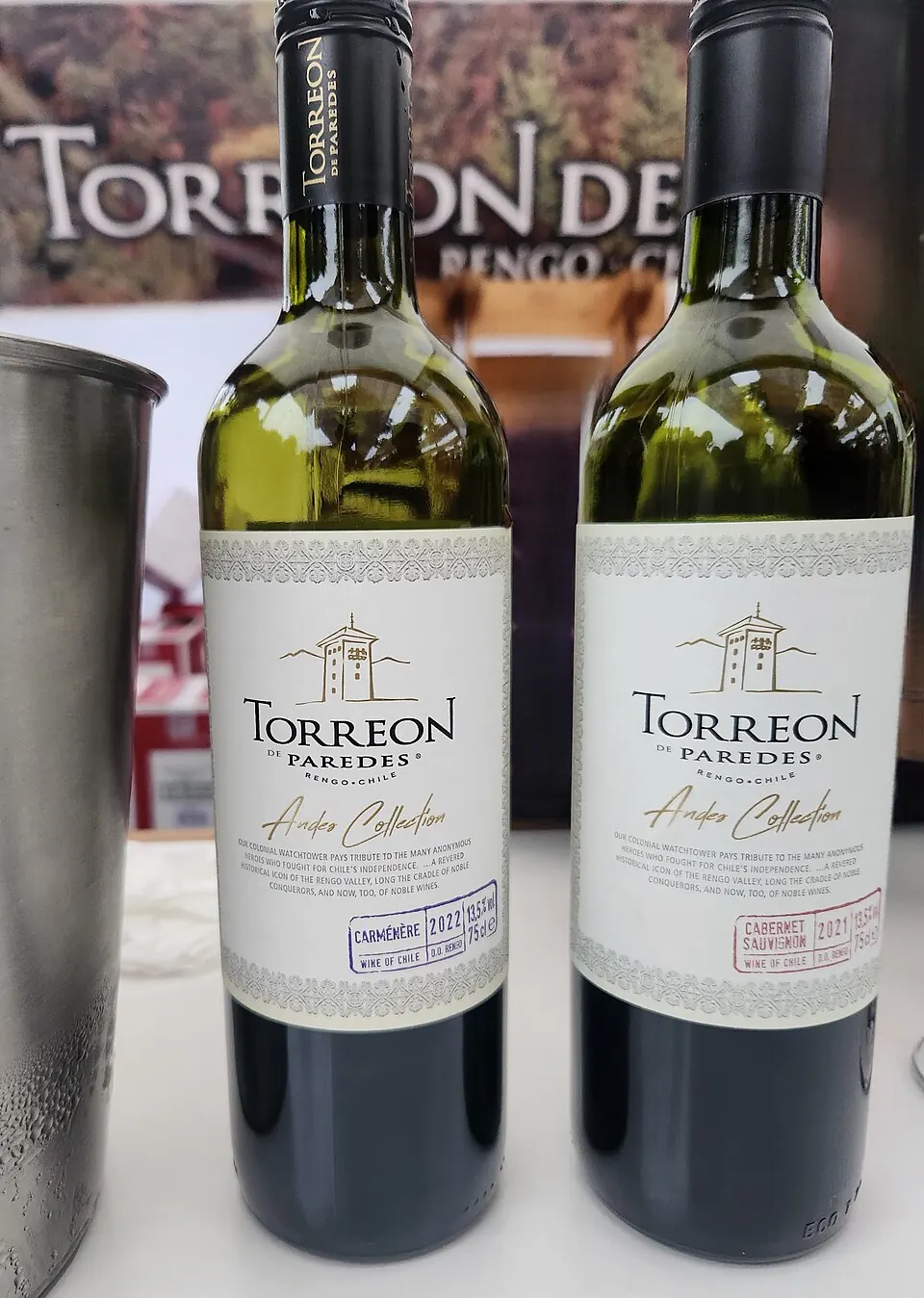

Chilean wine is a type of wine produced in Chile, with a winemaking history that began in the 16th century. It is made primarily from grape varieties such as Cabernet Sauvignon, Merlot, and Carmenère, and typically has an alcohol content of at least 11.5%.
History
Winemaking in Chile began in the 16th century when Spanish conquistadors and missionaries brought European grape vines to the country. The most widely planted grape became País, which remained dominant until the 21st century. In the mid-19th century, French grape varieties such as Cabernet Sauvignon, Merlot, Carmenère, and Cabernet Franc were introduced. Winemaking evolved from a cottage industry to a major industrial sector by the end of the 19th century.
How it is made
Modern winemaking in Chile began in the 1980s with the introduction of oak barrels for aging and stainless steel tanks for fermentation. The country's climate is described as intermediate between California and France, with dry conditions in the central regions and cooler, wetter conditions in the south. Vineyards are irrigated using meltwater from the Andes. Chilean vineyards have avoided phylloxera, eliminating the need for grafting.
Types and styles
Chilean wine is classified under the Denominaciones de Origen (DO) system, which includes regions, sub-regions, zones, and areas. The main regions are Atacama, Coquimbo, Aconcagua, Central Valley, Southern, and Austral. In 2011, a west-east division was added: Costa, Entre Cordilleras, and Andes. To indicate a specific region on the label, at least 75% of the grapes must come from that region (85% for export to the EU).
Adapted from the Russian Wikipedia article Виноделие в Чили, available under CC BY-SA 4.0.