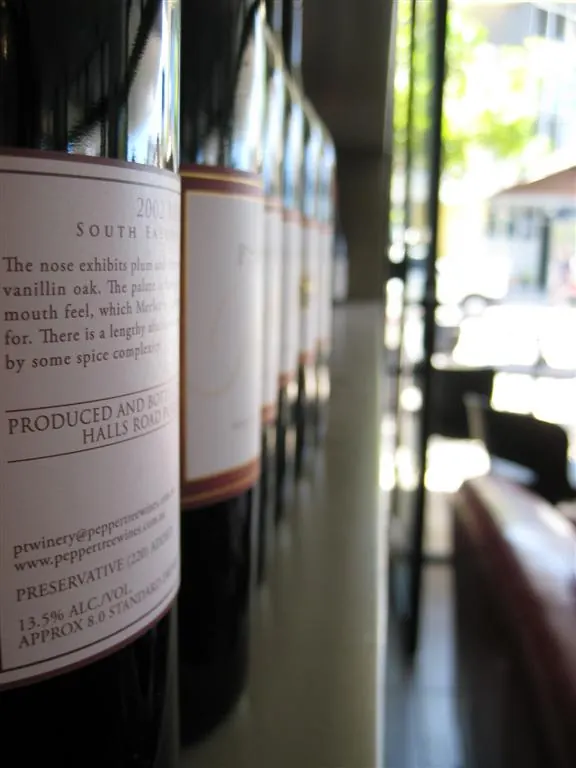

Australian wine encompasses a wide range of wines produced across the country, primarily in the southwest and southeast regions. The wines vary in style from full-bodied reds to crisp whites, with alcohol content typically ranging from 12% to 15%.
History
Australian wine production began with European immigrants, particularly those from Italy and Dalmatia. James Busby is considered the father of Australian wine, first cultivating grapes along the Hunter River. Mass production in European style began in the mid-19th century. By the 1870s, Victoria had become the leading producer, making twice as much wine as its competitors combined. The industry shifted from fortified wines to dry reds in the mid-20th century, with Penfolds Grange becoming Australia's first internationally recognized 'great wine' in the 1950s.
Geography and Production
Three-quarters of Australian wine is produced in the Murray Basin regions, including Riverland and Riverina, which rely on irrigation. The Barossa Valley, north of Adelaide, is home to some of the oldest grapevines in the world, unaffected by phylloxera. Tasmania's cool climate is ideal for pinot noir and sauvignon blanc. The largest producer is Treasury Wine Estates, with Penfolds as its flagship brand. Other major companies include Accolade Wines and Casella Wines.
Grape Varieties
Australia has no native grape varieties, all were imported from Europe. Shiraz is the most widely planted black grape, accounting for over 25% of the national harvest. Chardonnay leads white varieties, with Australia responsible for 10% of global plantings. Other significant varieties include cabernet sauvignon, merlot, semillon, sauvignon blanc, and riesling. Some varieties like durif and petit verdot perform better in Australia than in their European homelands.
Export and Market
Australia's key export markets include the United Kingdom, China, India, the US, and Canada. Export statistics show significant volatility, with a 88% decrease to China in 2021 and a 182% increase to India in the same year. The industry faced challenges from a trade war with China, which imposed nearly 200% tariffs on Australian wine in 2020. By 2024, China had lifted these sanctions, though the industry continues to struggle with overproduction, leading to vine removals.
Adapted from the Russian Wikipedia article Виноделие в Австралии, available under CC BY-SA 4.0.