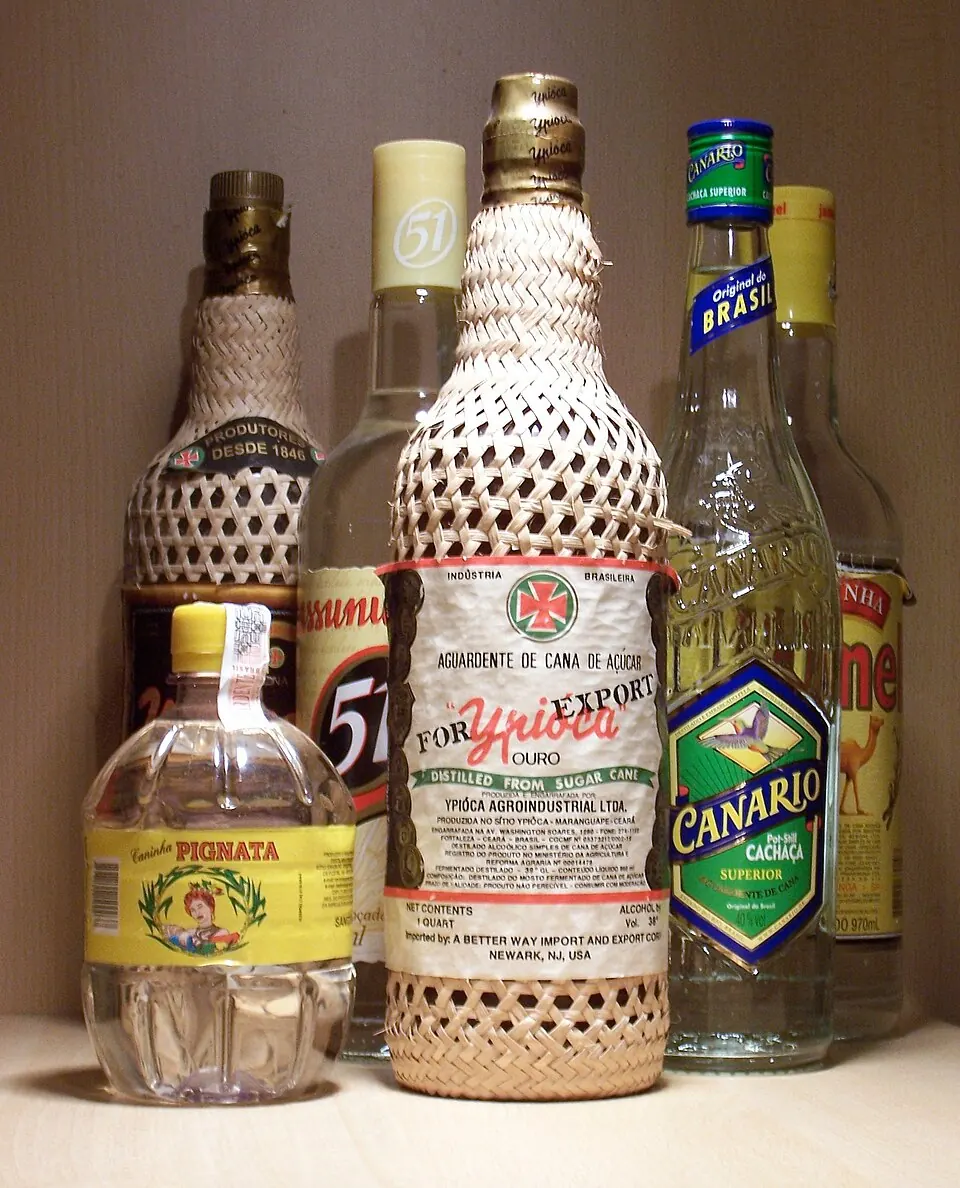

Cachaça is a strong alcoholic beverage produced in Brazil by distilling fermented sugarcane juice. It typically has an alcohol by volume of 40% and is sometimes referred to as Brazilian rum.
How it is made
Cachaça is made by distilling fermented sugarcane juice. The distillation process separates the 'head', 'heart', and 'tail' fractions, with only the heart being retained. After distillation, the alcohol content can range from 38% to 54%, though it's typically diluted to 40% before bottling. Some cachaças are aged in wooden barrels for anywhere from six months to three years.
Types and styles
In Brazil, cachaça is divided into two main categories: cachaça de fazenda (farm-made) and industrial cachaça. Farm-made cachaça is produced traditionally in small batches using copper pot stills and aged in wooden barrels. Industrial cachaça is made in column stills and typically stored in stainless steel tanks, with little barrel aging. White cachaça is commonly used in cocktails like Caipirinha, while aged varieties resemble whiskey or cognac in color and flavor.
How it is served
Cachaça is served in various ways. White cachaça is typically used in cocktails including Caipirinha, Batida, Rabo de Galo, Strawberry Caipirinha, and others. Aged cachaças are often enjoyed neat as a sipping spirit. The spirit is a key component of Brazilian culture and has been granted national commercial status as Brazil's traditional sugarcane spirit.
Adapted from the Russian Wikipedia article Кашаса, available under CC BY-SA 4.0.
Styles and varieties
- Nega Fulô
- Beija Cachaça
Well-known brands
- Leblon Cachaça (Brazil)
- Cachaça 51 (Brazil)
- Cabana Cachaça
- Cachaça Sapucaia