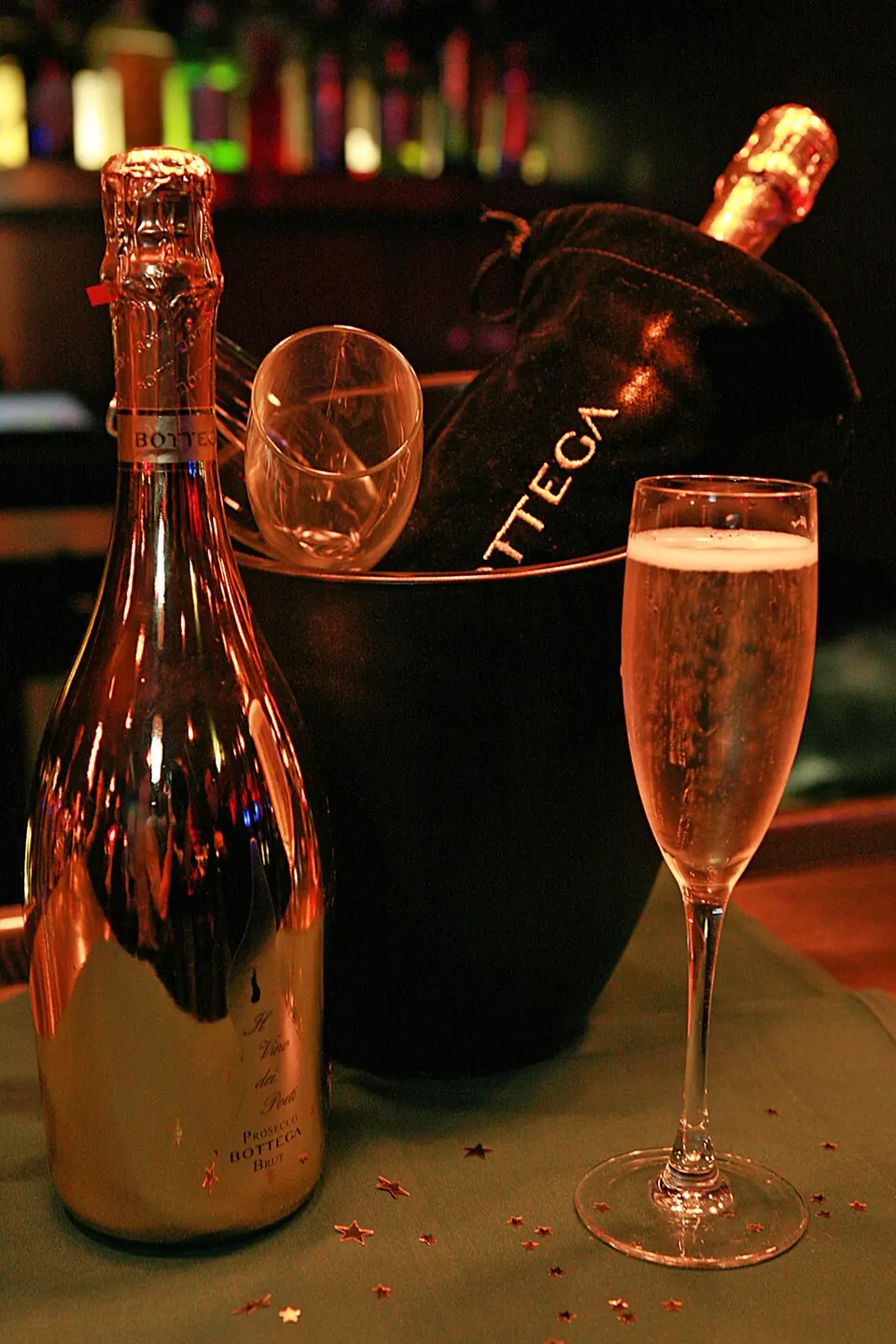

Prosecco is an Italian dry sparkling wine made mainly from Glera grapes, sometimes with small additions of Verdiso, Perera, and Bianchetta. It is produced in the regions of Friuli-Venezia Giulia and Veneto, typically with an alcohol content of 11-12%.
How it is made
Unlike champagne, Prosecco is made using the Charmat method, where secondary fermentation occurs in stainless steel tanks. This process makes production less expensive than champagne. Prosecco is mainly produced as sparkling wine, with either spumante (more than 3 atm pressure) or frizzante/gentile (less than 3 atm pressure).
History
The name Prosecco comes from a village in eastern Italy, whose name derives from the Slavic word 'proseka'. Until the 1960s, Prosecco was a sweet wine similar to Asti Spumante. Since then, production techniques have improved, resulting in high-quality dry wines. Since 2009, Prosecco production has been divided into two categories: DOC and DOCG.
Types and styles
Prosecco is classified by sweetness level: Brut Cuvee (0 g/l sugar), Extra Brut (3-6 g/l sugar), and Brut (up to 15 g/l sugar). All have an alcohol content of 9-13%. A small amount of still wine (calmo or tranquillo) is also produced but rarely exported. Wines from the traditional Conegliano-Valdobbiadene region are considered higher quality.
How it is served
In Italy, Prosecco is considered a wine for any occasion. Outside Italy, it's often served as an aperitif like champagne. It should be served chilled and consumed young, ideally within two years of production. Prosecco is enjoyed neat but is also used in cocktails such as Bellini, Spritz, Mimosa, and Sgroppino.
Adapted from the Russian Wikipedia article Просекко, available under CC BY-SA 4.0.