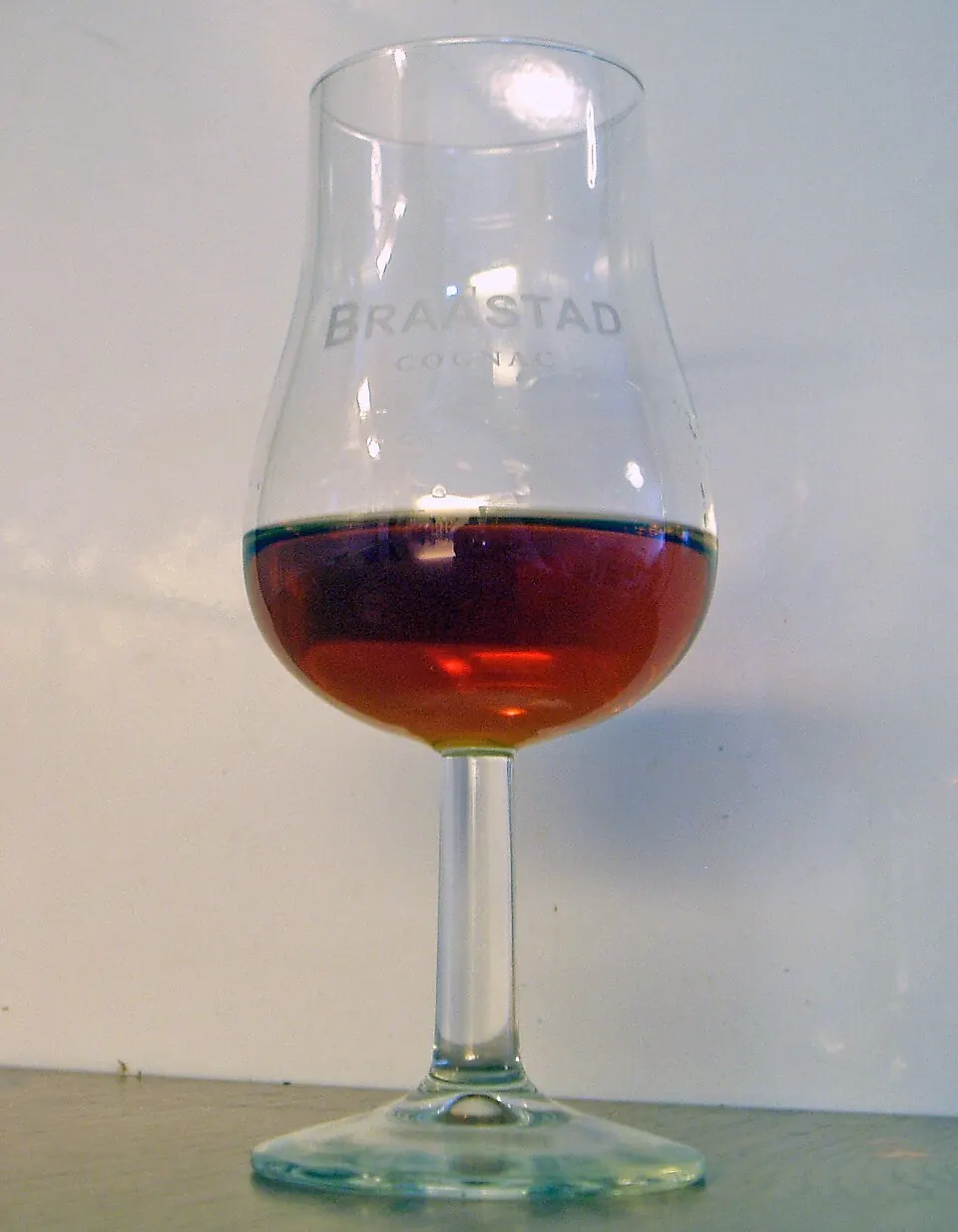

Cognac is a strong alcoholic beverage and a variety of brandy made from specific grape varieties in the Charente region of France. It typically has an alcohol by volume of 40% and is known for its distinctive production process and aging in oak barrels.
How it is made
Cognac is primarily made from the Ugni Blanc grape variety, which accounts for over 90% of production. Other varieties used include Folle Blanche, Colombard, and Montilla. The grapes are harvested in October and the juice is fermented without added sugar. The resulting wine undergoes double distillation in traditional Charentais stills, producing a spirit called 'eau-de-vie' that is then aged in oak barrels. The minimum aging requirement is two years, though many cognacs are aged much longer to develop their characteristic flavors.
History
The production of cognac began in the 12th century when Dutch traders started shipping wines from the Charente region. When these wines became difficult to transport, the Dutch began distilling them into 'burnt wine' or brandy. By the 17th century, French distillers had perfected the double distillation process and discovered that the spirit improved with aging in oak barrels. The geographic boundaries for cognac production were legally established in 1909, and in 1936 it received Appellation d'Origine Contrôlée status, protecting its name and production methods.
Types and styles
Cognac is categorized based on its aging and the specific growing region within the Charente area. The main styles include Fine Champagne (made from grapes from both the Grande and Petite Champagne regions), and other sub-regions like Bons Bois, Fins Bois, and Bois Ordinaires. Notable brands include Louis XIII, Frapin, and Plantiac. The age of cognac is indicated by terms like VS (Very Special, aged at least 2 years), VSOP (Very Superior Old Pale, at least 4 years), and XO (Extra Old, at least 6 years).
How it is served
Cognac can be enjoyed neat, in a tulip-shaped glass to concentrate its aromas, or served slightly chilled. It's also commonly used in cocktails such as the Sazerac, Sidecar, Stinger, Brandy Alexander, and Vieux Carré. The spirit pairs well with chocolate, cheese, and nuts, which can enhance its complex flavors. Cognac is also sometimes used in culinary preparations, particularly in sauces and desserts.
Adapted from the Russian Wikipedia article Коньяк, available under CC BY-SA 4.0.
Styles and varieties
- Plantiac
- Fine champagne
Well-known brands
- Louis XIII
- Frapin